Restoring Landscapes with Prescribed Burns
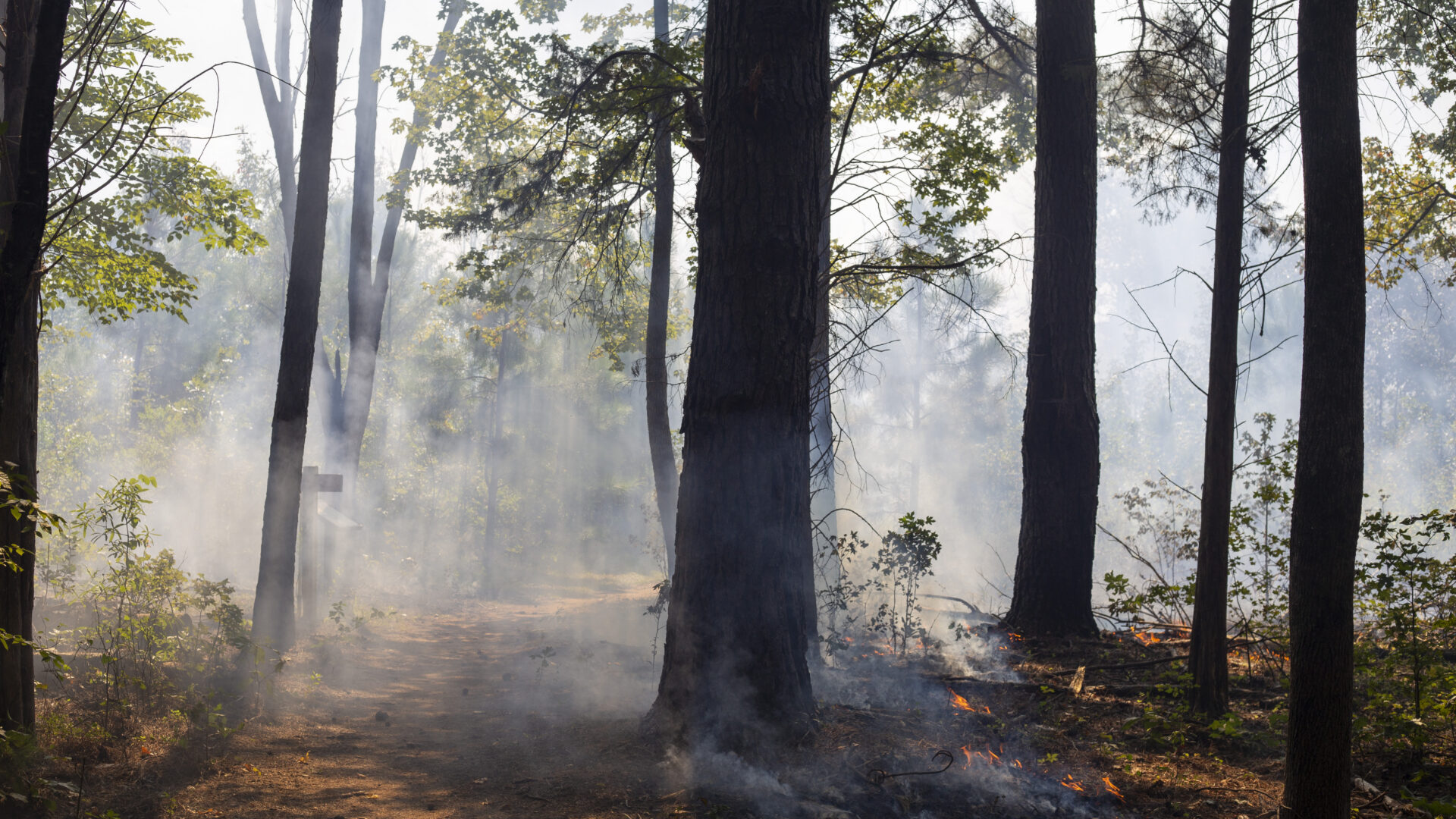
TLC uses controlled burns to maintain healthy wildlife habitats and increase ecosystem diversity throughout our region. Controlled burning is an ancient land management tool that encourages regrowth of diverse grass and wildflower species and reduces competition of woody plants.
Learn more about when TLC deploys this tool and sign up for alerts if you are a preserve neighbor or frequent visitor.
History of Prescribed Fire
For millennia, natural and anthropogenic fire has been an essential element of our landscape in the southeastern United States. Indigenous Americans used fire as a land management tool for more than 10,000 years, resulting in fire-dependent ecosystems in which humans were a crucial component.
These populations used controlled burns to sustain wildlife habitats for hunting, to encourage wild forage and fiber species, and to clear vegetation for agriculture. These practices created landscapes vastly different from the forests we see today.
Prior to European colonization, frequent low-intensity burns maintained grasslands, low-density forests, and savannahs. In addition to human-induced fires, lightning-induced fires and grazing by megafauna were also critical components in maintaining grassland communities. De-population, forced removal of Indigenous peoples, and an era of fire suppression in the early 1900s meant less fire, thereby increasing fire-intolerant species, forest density, and loss of grassland ecosystem that rely on disturbance to thrive.
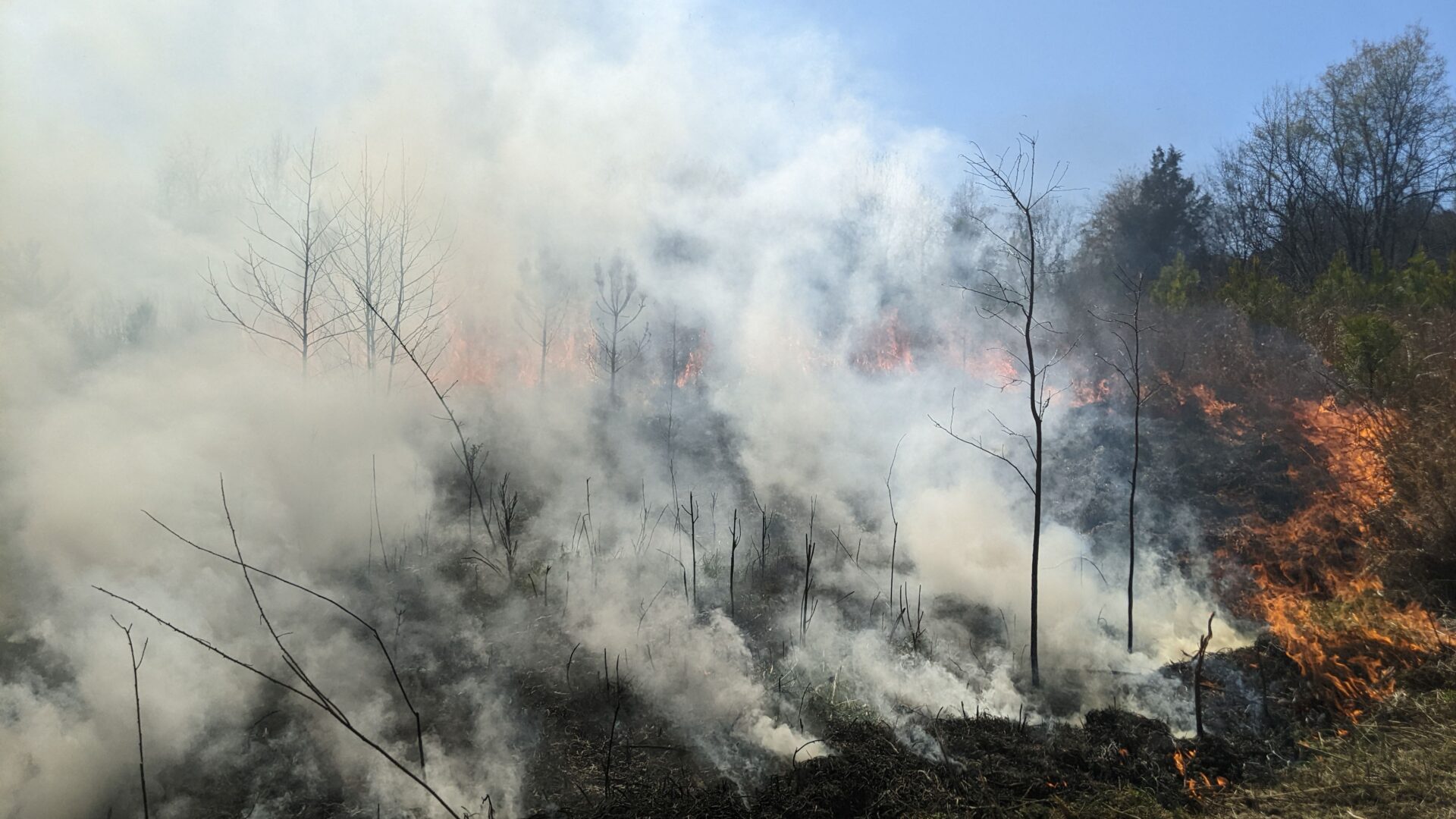
"For thousands of years, much of North Carolina burned every 1 to 10 ten years, either at the hands of humans or from lightning ignitions. Indigenous peoples used fire to shape southern forests and grasslands—to drive game, improve forage for wildlife, clear land for cultivation, enhance travel corridors, and reduce the risk of wildfires."
"Using Fire to Improve Wildlife Habitat," NC State Extension

Habitat Benefits of Prescribed Fire
Fire has many benefits for flora and fauna. It suppresses the growth of smaller trees and shrubs, which allows more sunlight to reach the forest floor or creates more space for grasses and forbs to thrive in more open landscapes.
For example, in forests, many oak species can be outcompeted by other species in the absence of fire. Oak seedlings have an adaptation where they develop resource reserves for the first few years after germination. After a fire has run through the forest understory, oak seedlings resprout vigorously, giving them an edge over the competition. This new growth also draws in insects that make good foraging ground for birds and other wildlife.
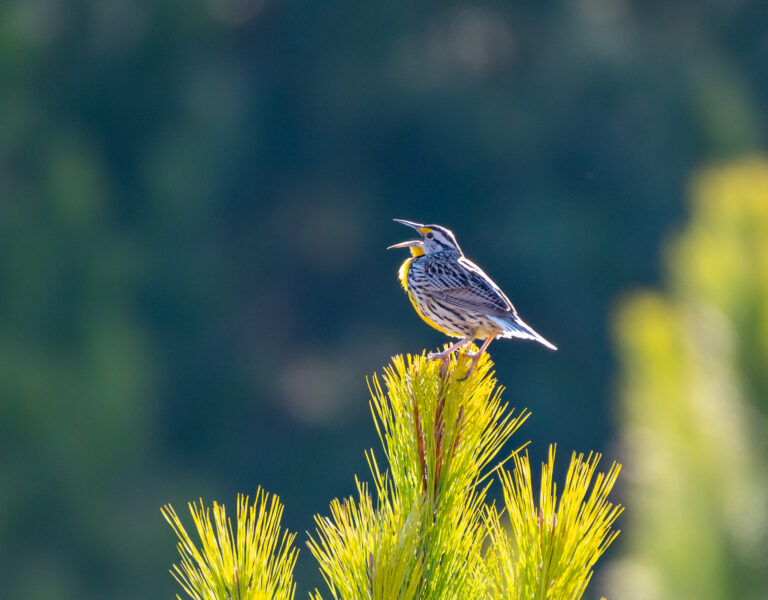
Piedmont prairies were extensive throughout our region before depopulation of Indigenous Americans and extirpation of large herbivores such as bison. Fire prevents woody vegetation from displacing grass and wildflower species and removes accumulated debris to encourage new plant germination. Birds like the iconic eastern meadowlark require grasslands for nesting and foraging. Many other species rely on grasslands for the plethora of insect, seed, and flower resources they provide.

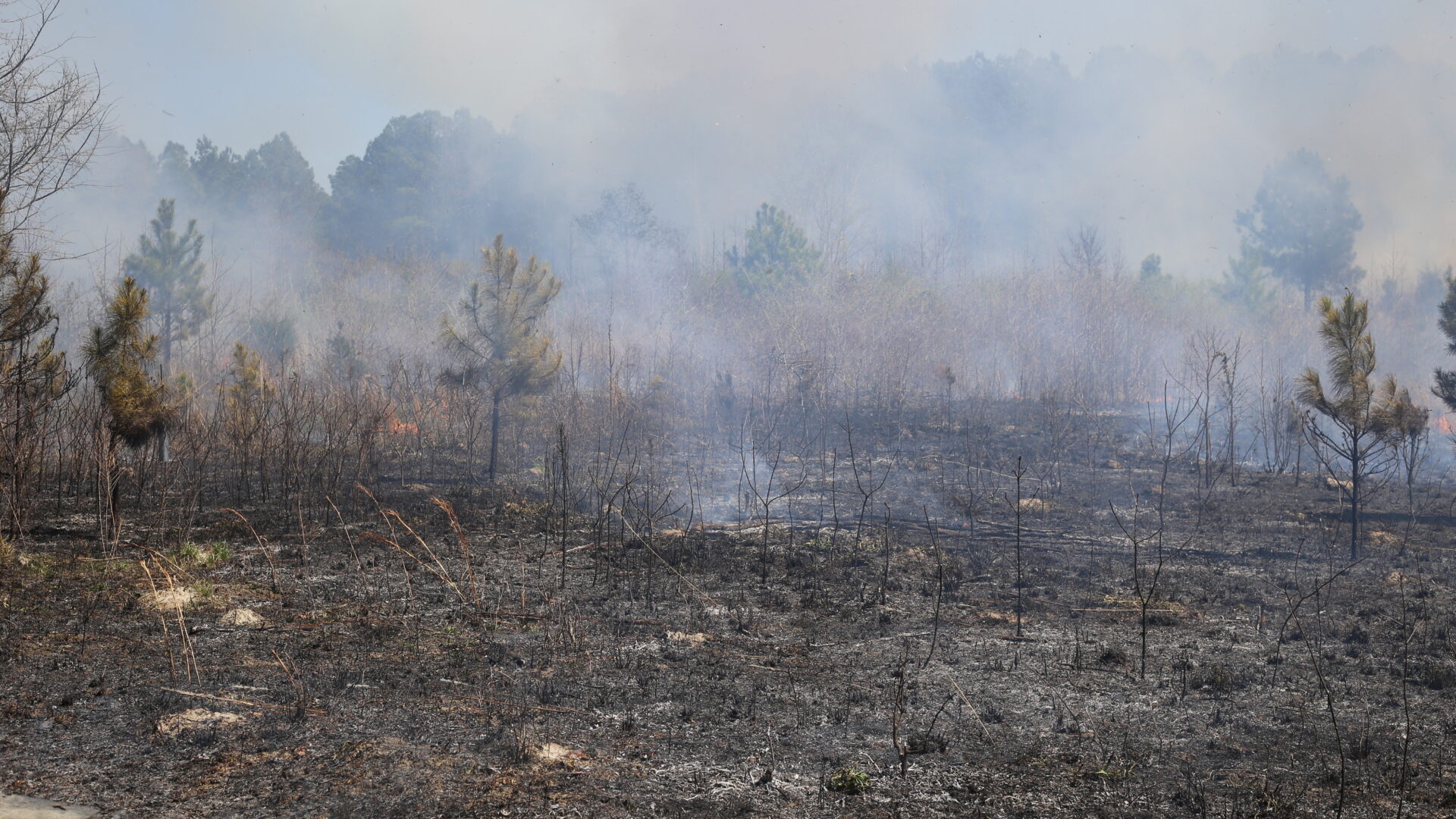
Fire keeps grasslands growing.
Burns clear out shrubs and debris so grasses and wildflowers can thrive, creating nesting and feeding habitat for the eastern meadowlark and many other species.
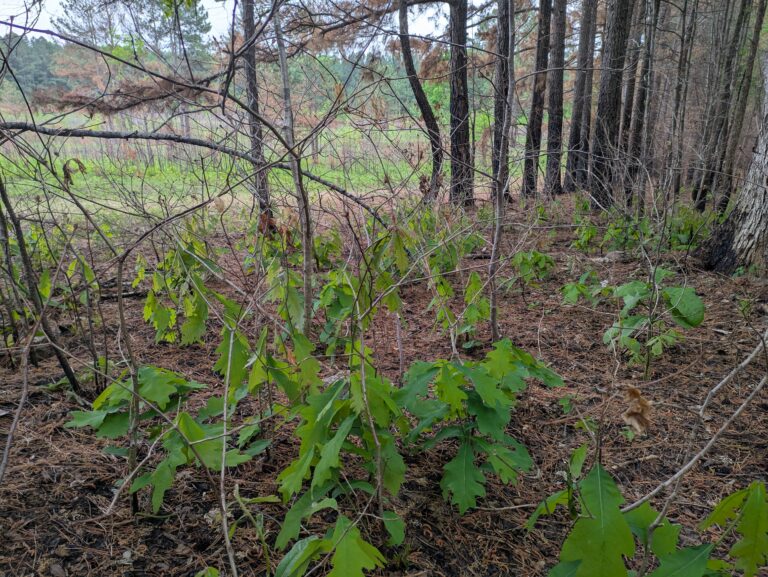
Fire helps oaks regenerate.
Oak seedlings store energy so they can resprout quickly after a burn, outpacing competitors and creating insect-rich foraging ground for birds.
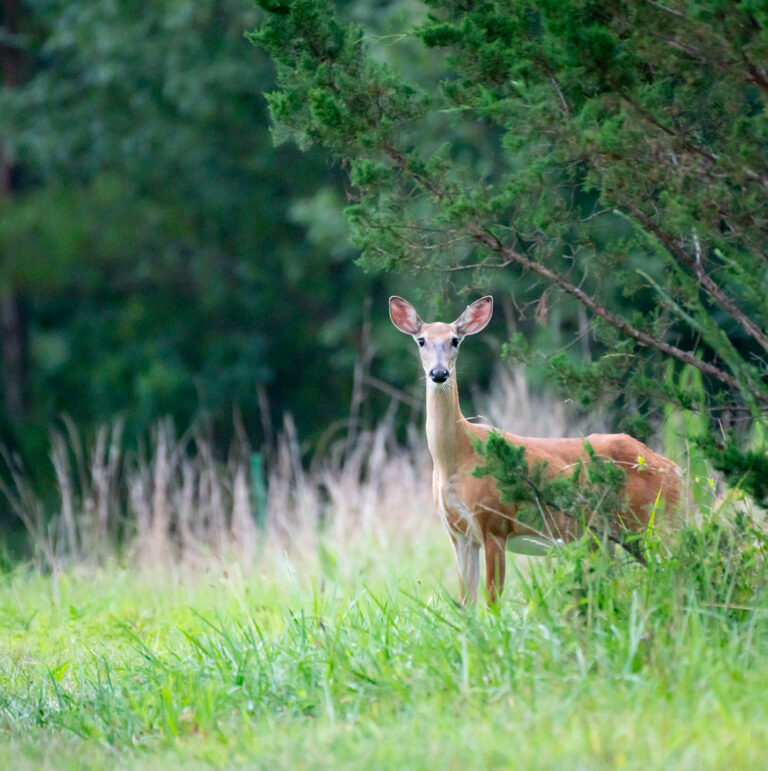
Fire keeps wildlife fed.
Burning generally lowers soil acidity, making nitrogen-fixing legumes more abundant; legumes produce seeds eaten by quail, turkey, and songbirds, and often are browsed by deer and rabbits.
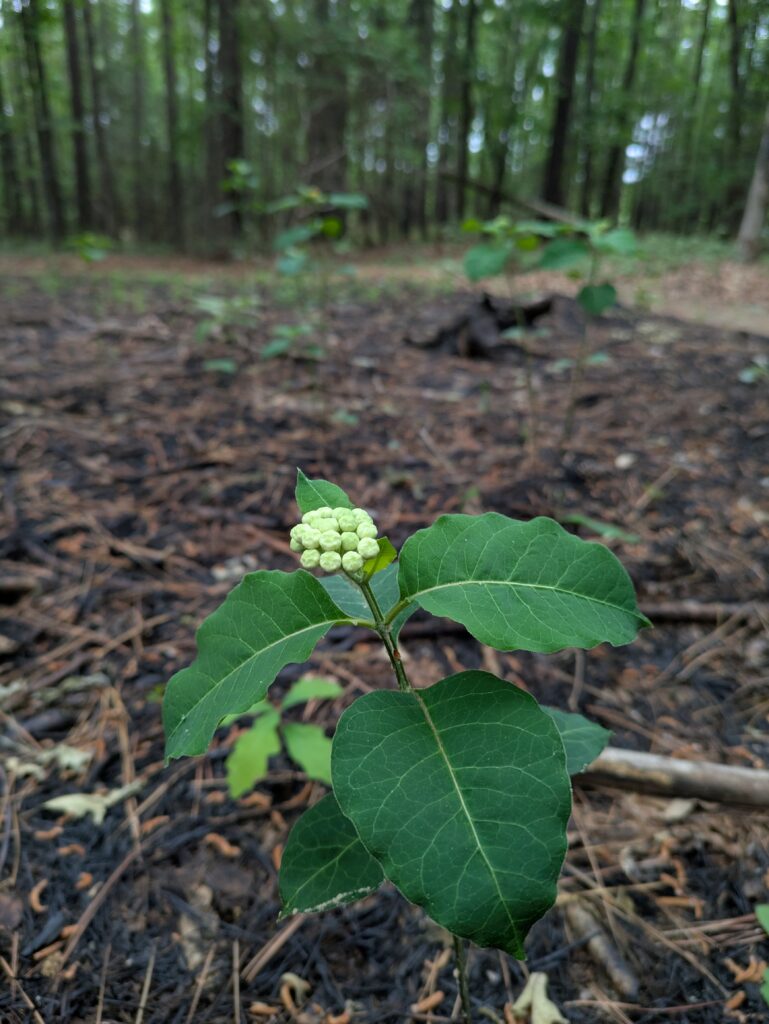
One month after a prescribed burn at TLC’s private Temple Flat Rock Nature Preserve, staff spotted white milkweed for the first time in years.
This unique milkweed species (Asclepias variegata) provides nectar resources for forest pollinators and is a host plant for monarch butterflies during their migration across North America.
Photo by Patrick Boleman
Conditions for Prescribed Fire
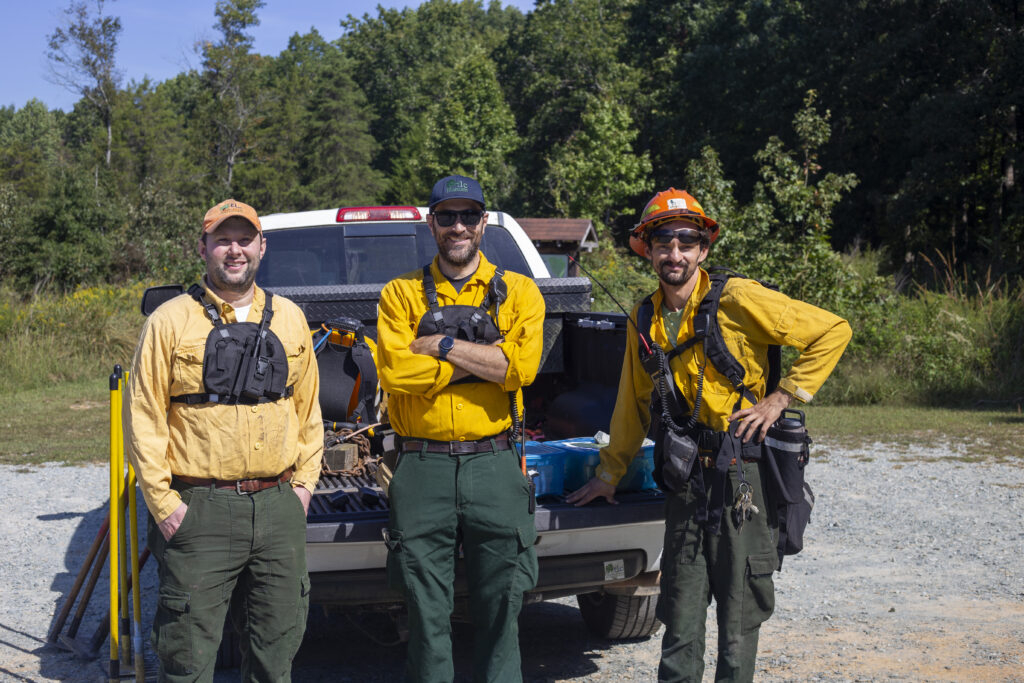
TLC staff spend time observing plant species and habitat composition to determine when weather conditions are ideal for conducting burns. Conditions like surface wind direction and speed, atmospheric smoke dispersion (known as ventilation rate), humidity, fuel moisture content, and time of year are just a few factors that go into a burn prescription.
Because we carefully monitor for the right conditions, TLC often conducts burns on short notice. We make every effort to alert preserve goers and neighbors via our social media channels and website. If you live near a preserve or are a regular visitor and would like to be added to our burn alert email list, you can sign up below.
Frequently Asked Questions
What happens to wildlife during a burn?
Because fire is a natural component of the environment, wildlife species have evolved alongside fire for thousands of years and have different adaptations to avoid mortality. In fact, many species are “fire-adapted,” and their populations would suffer from a lack of burning. For this reason, animals have some adapted escape mechanisms. Deer, foxes, and bobcats run; birds and bats fly; and mice, lizards, snakes, and salamanders go underground into burrows or under rocks and fallen logs as a fire approaches. While most wildlife is able to escape, sometimes individuals do not. However, the overall habitat benefits of fire mean that more animals will thrive in the long-term.
How long does it take to conduct a prescribed burn?
From ignition start to end, most of our burns only last 2-4 hours. However, day-of prep and mop-up tend to mean total operations last 6-8 hours. Visitors can expect a preserve to be closed a whole day during a prescribed burn.
How soon do you see benefits after conducting a prescribed burn?
Some benefits show up right away. Burning reduces hazardous fuels, like built-up leaf litter and downed brush. In grasslands, a burn clears vegetation down to the soil, which stimulates new growth and helps seeds stored in the soil germinate.
Other benefits take seasons or even years to appear, as in the case of improving habitat for specific wildlife species. Those species may not return right away, but we continue to burn so the habitat is ready when they do.
How do you get the word out to neighbors before a prescribed burn?
Because we carefully monitor for the right conditions, TLC often conducts burns on short notice. We make every effort to alert preserve goers and neighbors via our social media channels and website. If you live near a preserve and would like to be added to our burn alert email list, please visit this link.
More Resources
Effects of Prescribed Fire and Wildfire: Frequently Asked Questions from North Carolina, Southern Fire Exchange
Wildlife and Wildfire: How Do Wild Animals Survive? NC State
Benefits of Prescribed Fire NC Forest Service