
We all believe North Carolina’s land is worth protecting and sharing. This week we’re launching…
For Wes Hall, NC Adapted Sports’ CEO, being active was never just a hobby; it is part of who he is. Growing up, he played soccer, skateboarded, and rode on BMX bikes among other sports. When he was 15, his life changed after being diagnosed with Osteosarcoma, a type of bone cancer that ultimately resulted in the amputation of his right leg.
“It kind of forced an exploration to see what I could do, what I could enjoy, and what I can do to stay active,” Hall explained.
Determined to continue pursuing the outdoors and movement he loved, Hall adjusted. Surfing became body boarding. He joined the swim team, became lifeguard certified, and eventually found his way into canoeing and kayaking.
Years later, while on a paddling trip around Charleston Bay in South Carolina, Hall experienced a moment that would shape the future of his work.
“You know those moments around nature and you kind of realize how energizing it is,” he began. “It needs to be shared and felt by everybody.”
This led Hall to start a kayaking program at his local Y for at-risk youth to get into a sport they may have otherwise never been exposed to. Over the next decade, Hall worked with more than 1,000 athletes each summer through the program.
“At a certain point in my career at the Y, I realized that I was the only [disabled] one working out at the gyms,” he shared. “And there had to be more people in the area with a disability who need to experience the benefits of maintaining an active lifestyle.”
From that point, Hall resigned from the Y and started volunteering at various organizations that had targeted experience with adaptive sports. It was during this time that he discovered adaptive cycling.
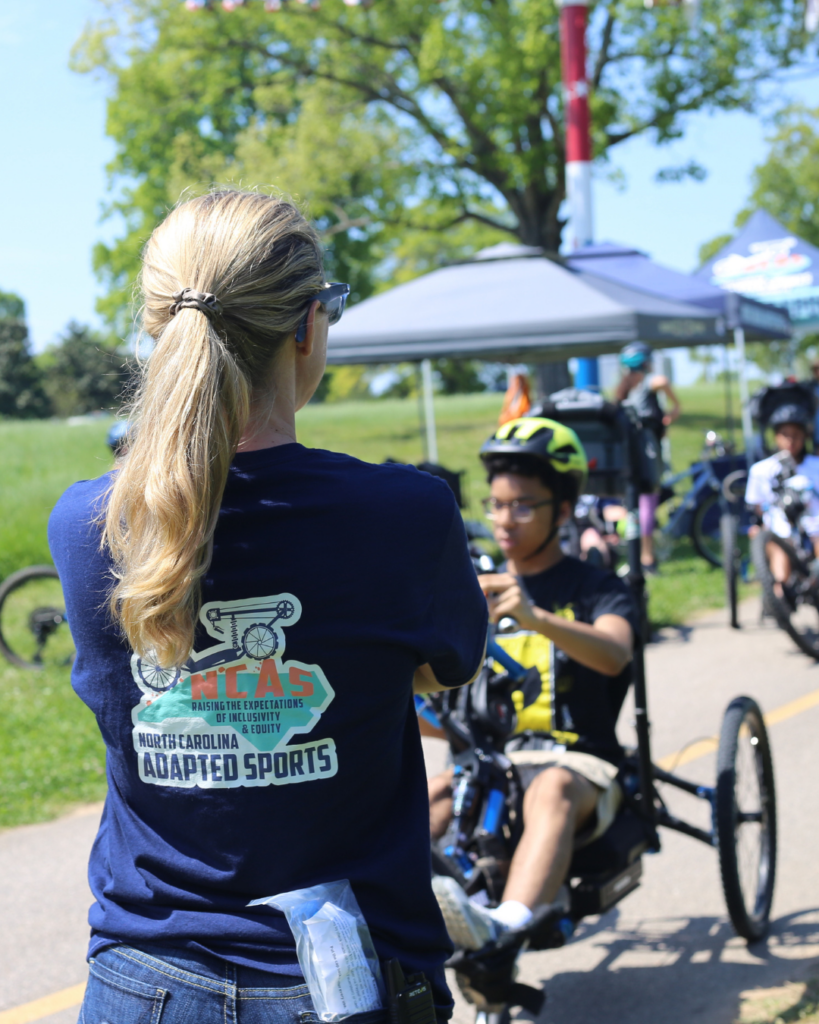
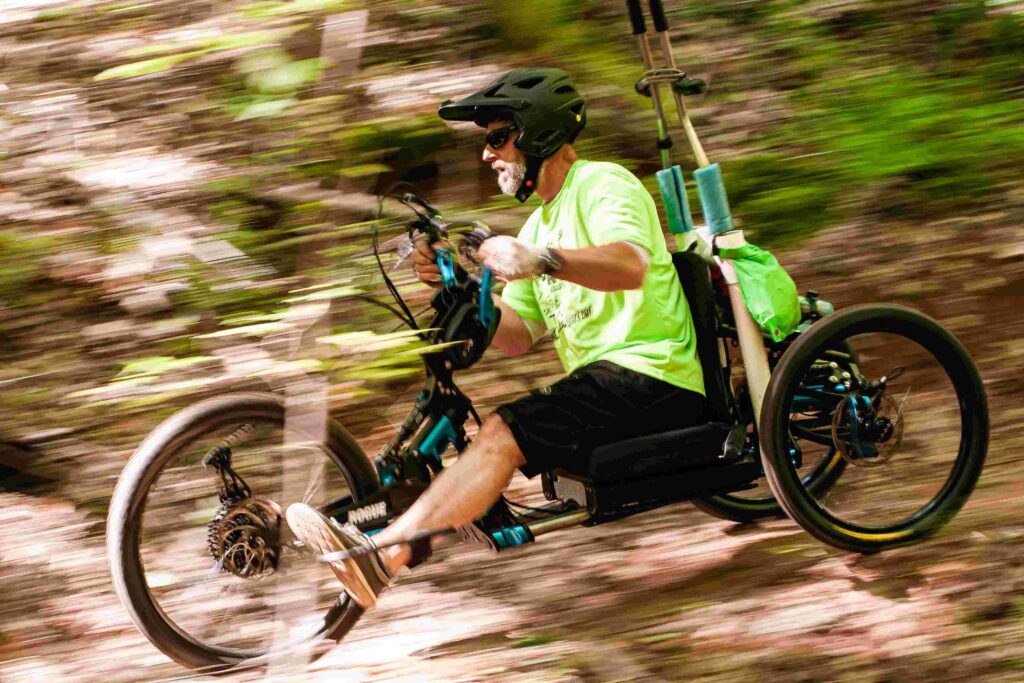
Adapted cycles, which can include handcycles, recumbent bikes, and three-wheeled cycles, allow riders with mobility impairments to experience trails and outdoor spaces in new ways. In 2022, a group of fellow riders known as the “Lowriders” encouraged Hall to create a ground-up, athlete-driven organization centered around adapted sports.
In its first year, NC Adapted Sports (NCAS) focused on eliminating barriers to access at Lake Crabtree trails.
“We want to provide a proactive approach for accessibility, dispelling the myth that accessibility means easy,” he began. “It just means I can ride my bike down the trails because they’re wide enough to go a down; a bridge is wide enough to go across.”
When evaluating trails, NCAS looks at elements like trail width and gradient, bridge width, turning radius, banking on turns, and pinch points — areas where adaptive cycles may not fit between trees or other obstacles. These details can determine whether someone using an adaptive cycle is able to fully experience a trail.
That expertise has become an important part of NCAS’s partnership with Triangle Land Conservancy (TLC). NCAS was first introduced to TLC after participating in Wild Ideas: Get Outside at Brumley Nature Preserve. Since then, Hall and other NCAS members have visited Brumley, Williamson, and Old Creedmoor nature preserves, offering recommendations and feedback to TLC’s Land Management team about trail accessibility and adaptive cycling access.
Hall says partnership among organizations is helping broaden conversations around inclusivity in outdoor spaces.
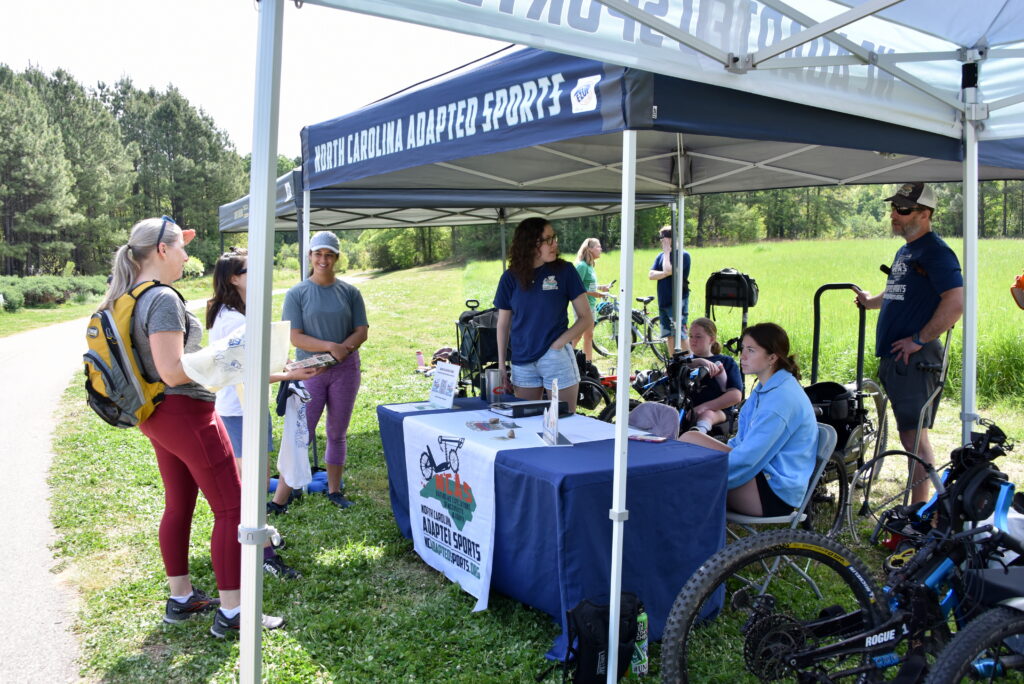
“It’s understanding how we enjoy the outdoors is different than our able-bodied peers,” he said. “We use mobility devices and help organizations like TLC make trails accessible for those mobility devices. A big game changer for getting people places they have never been before, or getting people back to places they didn’t think they would ever get back to.”
For organizations like NCAS and TLC, accessibility is more than infrastructure; it is about connection, confidence, and community. “Especially someone who's new to disability, the quicker we can get them socially engaged and then physically engaged after an accident, the better the recovery is going to be, emotionally, physically, and mentally.”
In the Triangle alone, Hall estimates there are approximately 18,000 youth and 120,000 adults living with mobility impairments. Through adaptive cycling and partnerships with organizations like TLC, NCAS is working to ensure more of those individuals can experience the outdoors in ways that are welcoming, empowering, and accessible.
Learn more about NCAS on their website and don’t miss Adapted Sports Day, which will be held at Bond Park on Saturday, September 12. Experience the fun of adapted sports and connect with partnering organizations serving the disability community in the Triangle Area.
