
TLC Trail Guide Margot Lester explores the spiritual and cultural role of turkey and black…
By Margot Lester, TLC Trail Guide and Bluestem Volunteer
When you look at a turkey vulture (Cathartes aura), what do you see?
Melody Scott saw “beauty, individuality, and a uniqueness in their purpose,” recalls her husband, Ron. “At times when we were out under an open sky view, a turkey vulture would fly over and she would mention how graceful their flight was and that was because of the spirits of the dead that were riding on their wings.”
In many cultures and traditions, vultures are psychopomps, escorts or messengers between here and the afterlife, as well as guardians and protectors. Turkey vultures, in particular, appear in many Indigenous tales and creation stories, and are symbols of freedom and rebirth for other communities.
Vultures’ scientific family name, Cathartidae, is from the Greek word for “purifier” — and they come by it honestly. Vultures process roadkill and other carrion quickly, which reduces methane and CO2 release. And they remove harmful bacteria and germs like anthrax, botulism, cholera and rabies from the ecosystem. (Microbes and acids in their systems neutralize the pathogens so the birds don’t get sick.)
Protecting the protectors
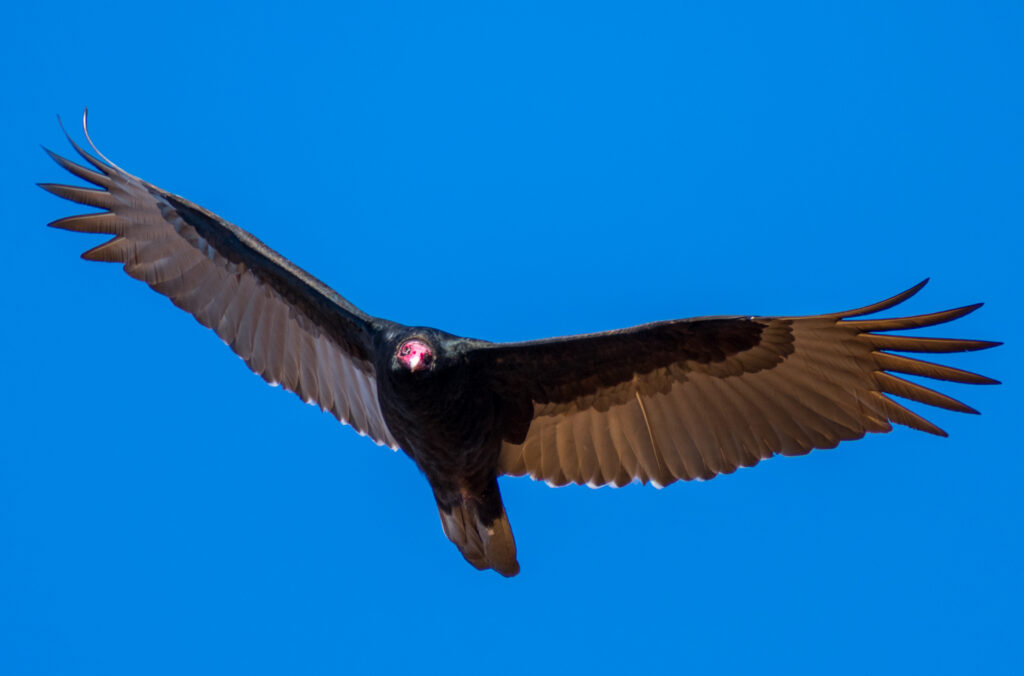
“Melody had a heart of gold,” Ron notes. She cared for all animals but went to special lengths to help vultures. “When she was driving down a road and it was safe to do so, Melody would pull off and move any roadkill to the shoulder of the road to help prevent them from being injured by motor vehicles.” (Did you know a group of feeding vultures is called a wake?)
That love of vultures prompted Melody's mother, Dot Stowe, to write a poem about them.
“Melody would recite the poem to anyone who happened to mention anything about birds,” Ron laughs. “Our friends must have heard it 10 times and her coworkers the same amount or more.”
Remembering Melody
When Melody died last year, Ron searched for a way to memorialize her that reflected her love of nature, in general, and vultures.
“Melody loved and appreciated all the beauty and uniqueness in nature,” he recalls. “She was thrilled by being dwarfed by standing in an old growth forest, feeling and seeing the clear cold water in the currents of mountain streams. Melody also saw beauty in our nation’s farmland of the eastern United States — but maybe not in a cotton farm in west Texas, where I’m from!” He decided on a bench on Horton Grove Nature Preserve’s Holman Loop. The grassland location affords a sweeping view of open sky where local turkey and black vultures (Coragyps aratus) frequently fly in a formation known as a kettle. Alongside the bench is a plaque bearing Melody’s beloved poem, a way for her to continue sharing it.
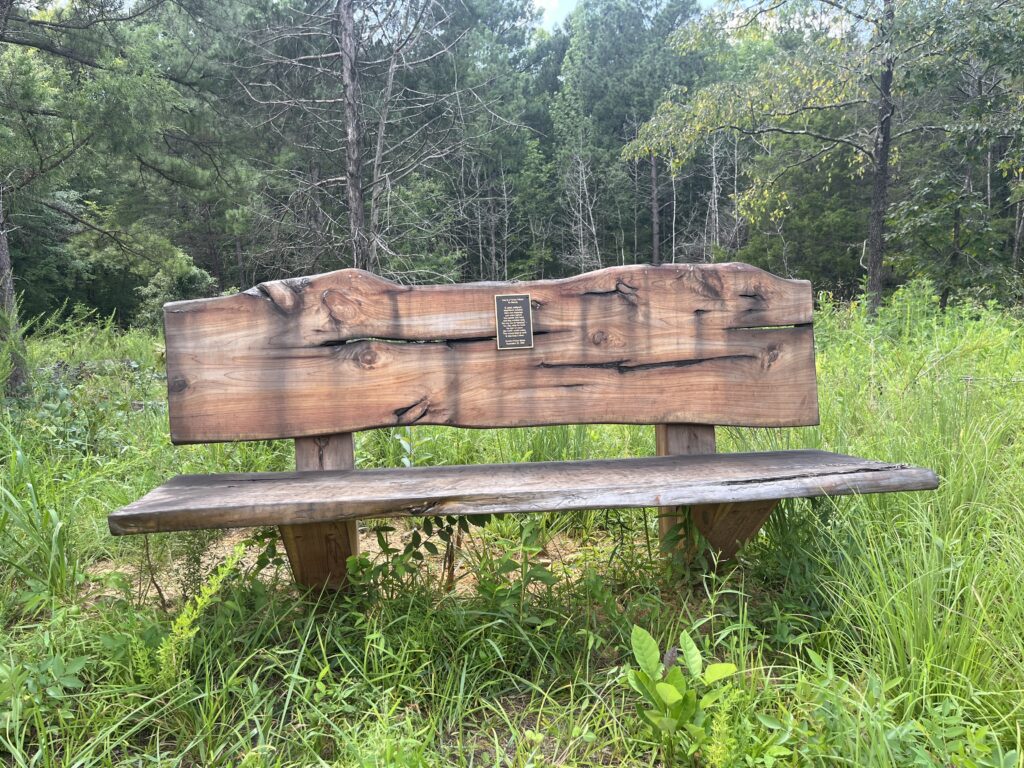
“I would hope that a visitor would sit on Melody’s bench, relax for a minute, read the poem and look up in the sky and see a turkey vulture,” Ron says. (Turkey vultures are easy to spot from below. They have silvery white feathers all along the undersides of their wings; black vultures have just a little white at their wing tips.) “At that time, they would have an epiphany of the purpose of the turkey vulture, also realizing all beings in nature — large or small — have a purpose.”
Check out this fact sheet from our partner Bluestem Conservation Cemetery for more insights on vultures.
Ode to a Turkey Vulture - for Melody
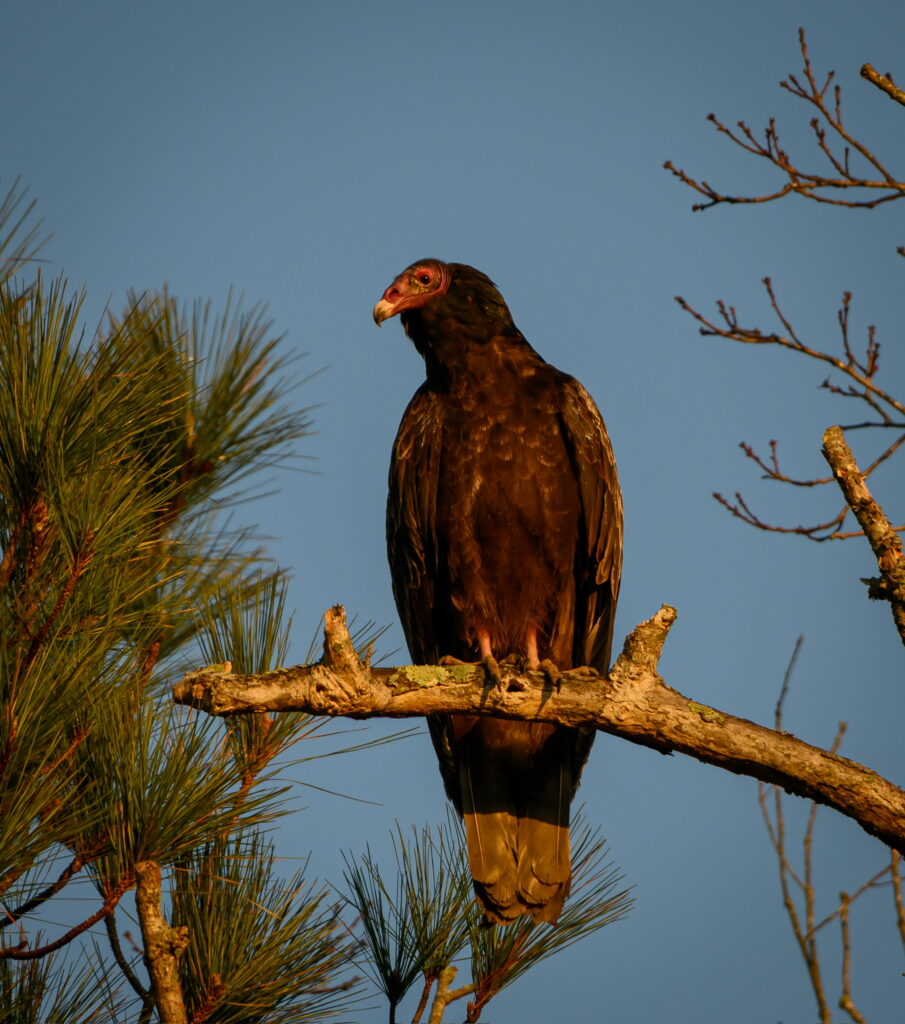
O, great, maligned,
magnificent creature;
Mere men disparage
your ev'ry feature;
Your scarlet bald head,
your long wrinkled neck;
The way you sit "hunched" -
but, Hey, what the heck!
You soar on above
this world's sordid scene,
Then swoop down to earth
to help keep it clean.

Dorothy Parker Stowe
September 25, 2000
