
I stepped out of my car, my boots crunching on the fall leaves in the…
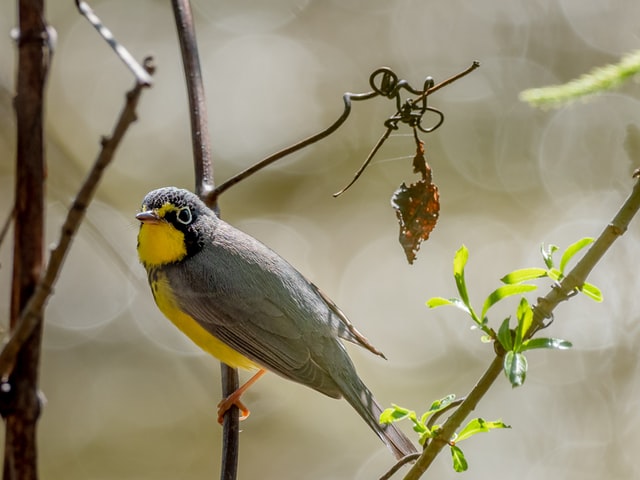 There have been 559 checklists submitted at Brumley North so far this year. In May, birdwatchers reported 111 species at Brumley North. Only the hotspot at Cape Hatteras National Seashore-Cape Point had more species than we did, and they only had 112 species. Of the 111 species seen at Brumley North, 17 were migrant species only here for a few weeks during the spring and fall seasons. The rest are our area's year-round, summer, or winter species. For many birders, the most exciting migrants are the various warbler species. This year, birders saw Wilson's, Canada, Worm-eating, and Bay-breasted Warblers, which are not typically seen every year in our area.
The unique combination of habitats at Brumley North contributes to the variety of birds we see at the preserve. The preserve contains at least six different habitats that attract other birds. We have moving water in Stoney Creek, water in the three ponds, mature hardwood forests, open fields, pine forests, and swampy lowlands. We are fortunate that the birding community has embraced Brumley North and frequented the preserve. Next time you visit, feel free to chat up a stranger wearing binoculars around their neck. They'll be happy to answer your questions about birds, like what bird species they've encountered and other intriguing facts. You never know; it might be TLC Director of Land Protection and Stewardship, West, Bo Howes. Birders are notorious for wanting to share (show off) their knowledge.
Why Birding?
Birds are everywhere. You hear them whenever you're outdoors. Nothing compares to the joy of getting a glimpse of a colorful bird and flipping hastily through your field guide to ID it. But what makes birding appealing (and growing in popularity) is that it combines hiking, strategy, and science –– all of which you can do at Brumley Nature Preserve.
There have been 559 checklists submitted at Brumley North so far this year. In May, birdwatchers reported 111 species at Brumley North. Only the hotspot at Cape Hatteras National Seashore-Cape Point had more species than we did, and they only had 112 species. Of the 111 species seen at Brumley North, 17 were migrant species only here for a few weeks during the spring and fall seasons. The rest are our area's year-round, summer, or winter species. For many birders, the most exciting migrants are the various warbler species. This year, birders saw Wilson's, Canada, Worm-eating, and Bay-breasted Warblers, which are not typically seen every year in our area.
The unique combination of habitats at Brumley North contributes to the variety of birds we see at the preserve. The preserve contains at least six different habitats that attract other birds. We have moving water in Stoney Creek, water in the three ponds, mature hardwood forests, open fields, pine forests, and swampy lowlands. We are fortunate that the birding community has embraced Brumley North and frequented the preserve. Next time you visit, feel free to chat up a stranger wearing binoculars around their neck. They'll be happy to answer your questions about birds, like what bird species they've encountered and other intriguing facts. You never know; it might be TLC Director of Land Protection and Stewardship, West, Bo Howes. Birders are notorious for wanting to share (show off) their knowledge.
Why Birding?
Birds are everywhere. You hear them whenever you're outdoors. Nothing compares to the joy of getting a glimpse of a colorful bird and flipping hastily through your field guide to ID it. But what makes birding appealing (and growing in popularity) is that it combines hiking, strategy, and science –– all of which you can do at Brumley Nature Preserve.