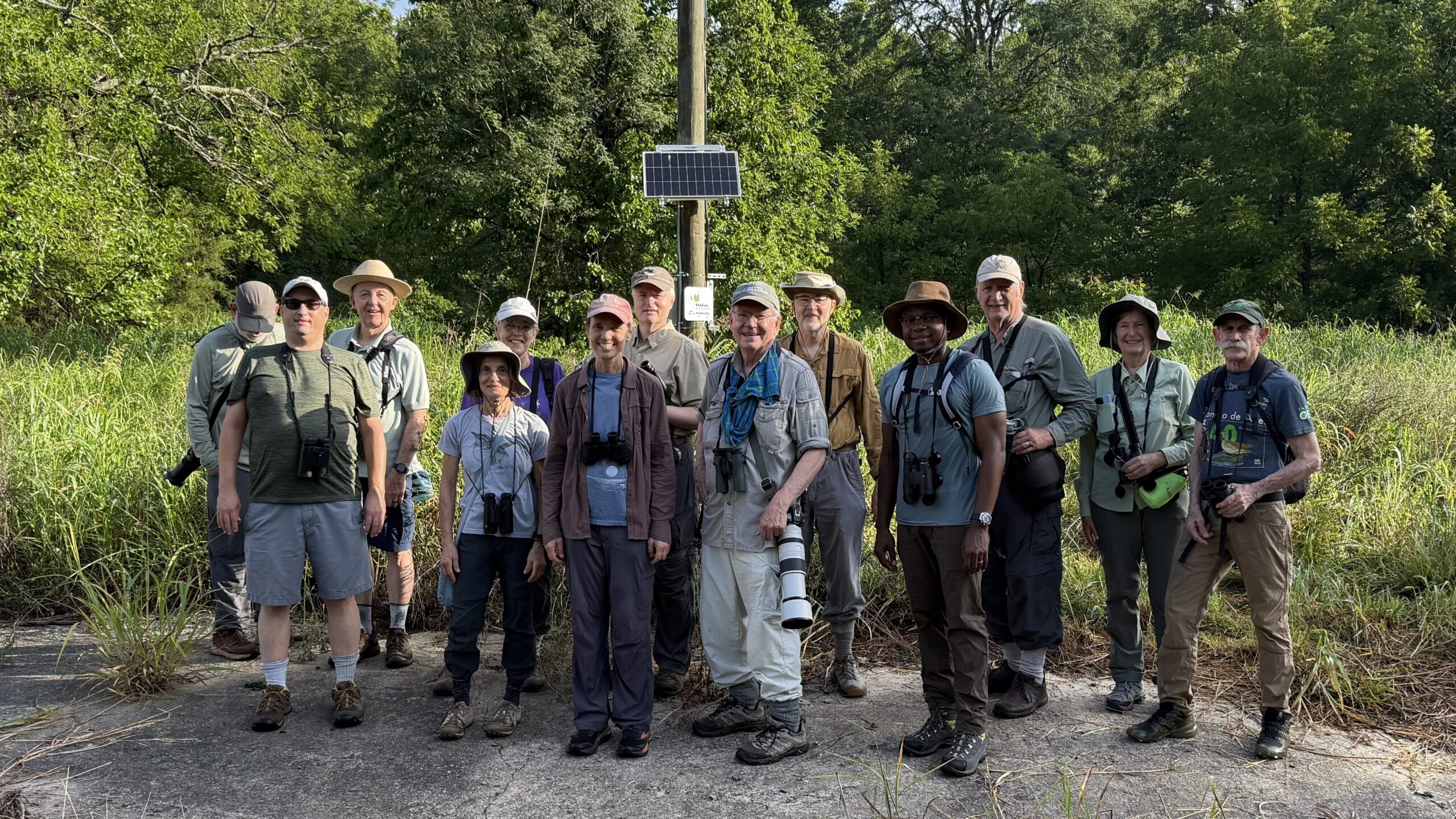
By Steve Emery - Volunteer event leader - March 3, 2019 We had a great…
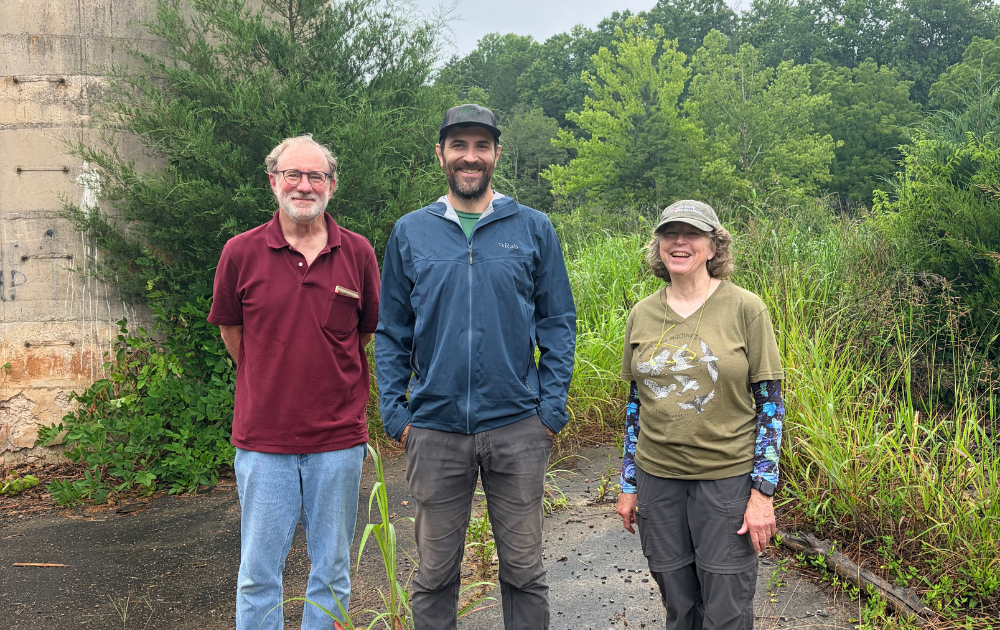
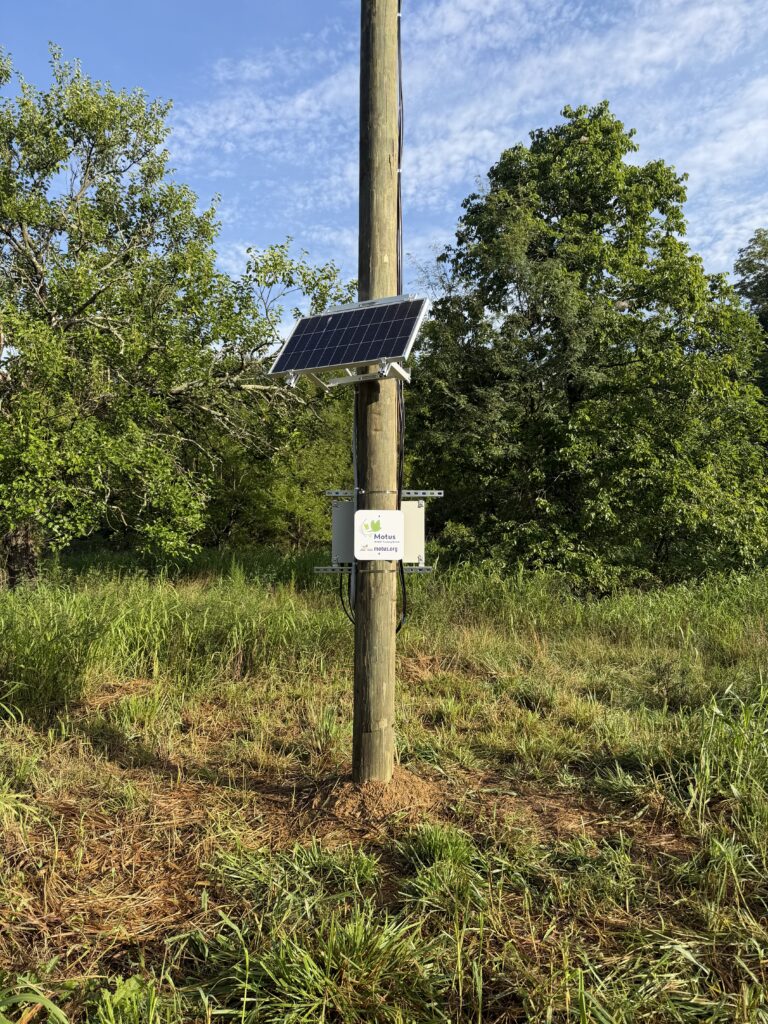
On a walk along Dairy Farm Trail at Brumley Preserve's North section, you may spot a new addition to the landscape. High in the sky above the trail's silo and pond is a Motus tower – part of a global network of wildlife tracking stations.
Based on the preserve's exceptional habitat quality and reputation as one of North Carolina's top birding hot spots, TLC's partners at New Hope Bird Alliance (NHBA) chose to fund and install a Motus station at Brumley North. With the expertise and equipment support from the American Bird Conservancy, this new station is up and already collecting data.
The Motus Wildlife Tracking System (Motus) is an international collaborative research network led by Birds Canada that uses radio telemetry to track the movement and behavior of small animals. Birds, bats, and insects like butterflies can be tagged with lightweight devices that emit radio signals to receiving stations as they pass by. Through Motus, scientists, organizations, government agencies, and individuals are working together to build an important database for research in movement ecology, conservation biology, and environmental science.
Brumley's Motus tower is one of 2,438 stations across 34 countries. Since Motus' inception in 2014, over 66,100 animals have been tagged and recorded through the network. NHBA and TLC staff and volunteers can download data directly from the tower, getting a sense of the tagged wildlife moving through and around Brumley North. The gathered data is also sent to the larger Motus network, contributing to a much larger, global conservation research effort.
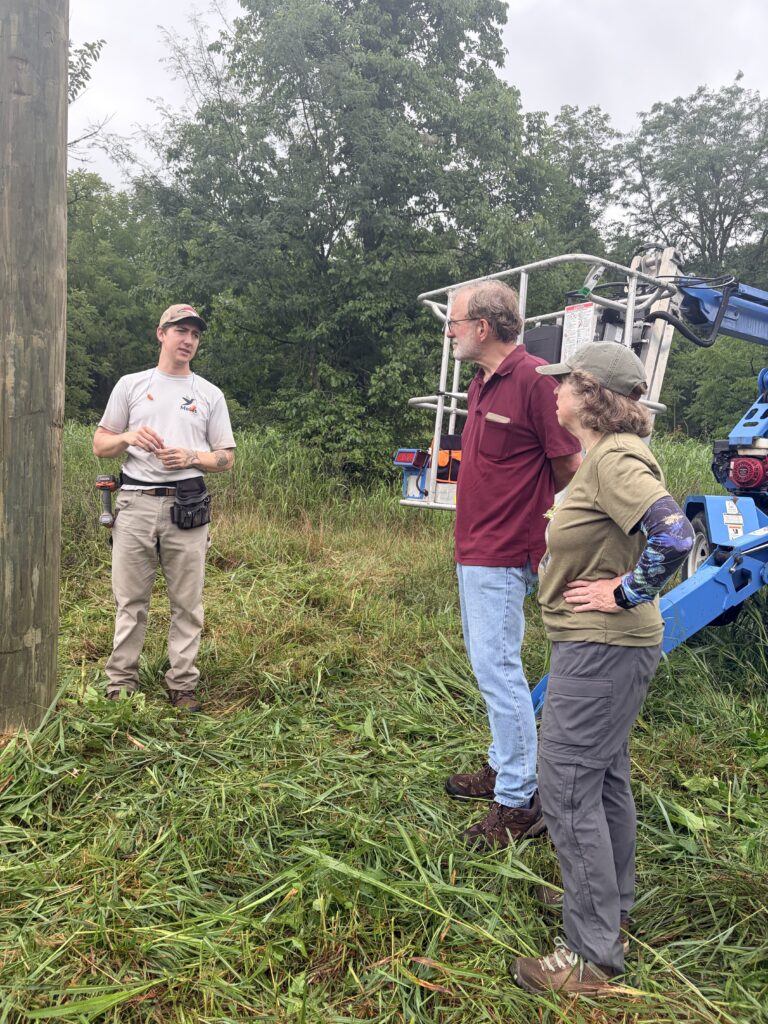
Species data from Motus provides a better understanding of how wildlife moves through landscapes. Information like an animal's arrival and departure times and length of stay can be used to infer how an animal uses a habitat and their seasonal migration habits. For conservationists, this is important in identifying key areas – such as stopover sites for migratory birds – and informing future efforts to protect land to provide resources and connect species populations.
This exciting research opportunity is a testament to the important ongoing work to rehabilitate Brumley's habitats. Prior to becoming a TLC nature preserve, the property had an extensive land use history including farming, forestry, and hunting. Invasive species like tree of heaven, privet, and autumn olive have also impacted the landscape greatly, crowding out native trees and plants.
In 2022, TLC began a focused effort to remove these invasive plants and diversify the habitat structure at Brumley, through the support of organizations like NHBA and the Cornell Lab of Ornithology. Using techniques like prescribed fire to maintain edge and open habitats, invasive species removal, and the planting of a diverse array of native species, TLC staff have been able to create a paradise for birds and other pollinators.
The Brumley North Motus tower is the first to be installed in the Triangle area. Through the data it collects, NHBA, TLC, and others will gain new insights on how species move through and interact with lands within the Triangle. TLC looks forward to the continued opportunities the tower will create for research and collaboration for local conservation.