
By Brenna Thompson, Land Protection Manager East Eastern Redcedar (Juniperus virginiana) The beginning of winter…
By Nick Adams, TLC Senior Land Manager, West
For plant enthusiasts, the arrival of warmer weather in the late winter months means that the first of the Spring ephemerals are on their way! In case you didn’t know, Spring ephemerals are a group of native plants that emerge from the forest floor before the official arrival of Spring. They complete their entire lifecycle before most trees have leafed out, taking advantage of the longer days and abundant light reaching the ground layer. Most die back (leaves and all) before Summer takes hold. To boot, the Spring ephemerals, though usually on the smaller end of plant size, are very showy and an extremely important nectar source for ants and native bees.
Many TLC preserves host impressive populations of Spring ephemerals, which include trout lilies, bloodroot, Virginia pennywort, trilliums, rue anemone, toothworts, and others. If you’re looking for a specific preserve to visit and see these beauties, Swift Creek Bluffs and Johnston Mill are crowd favorites. If you’re willing to travel a little further, Horton Grove and White Pines are excellent places to see them as well.
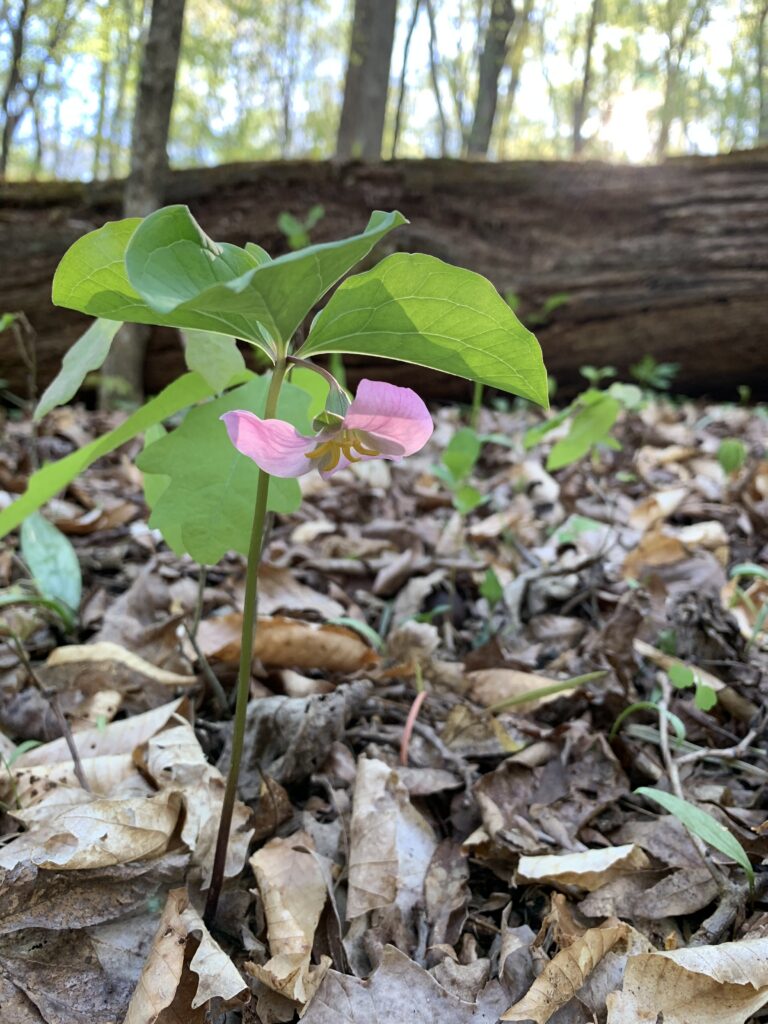
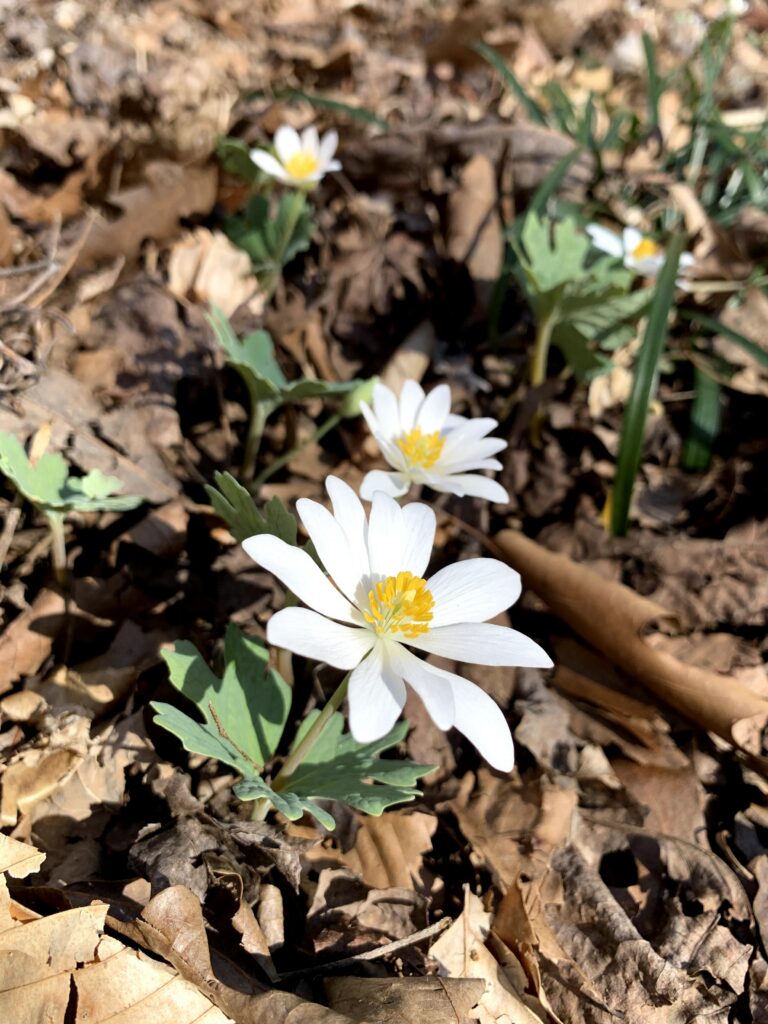
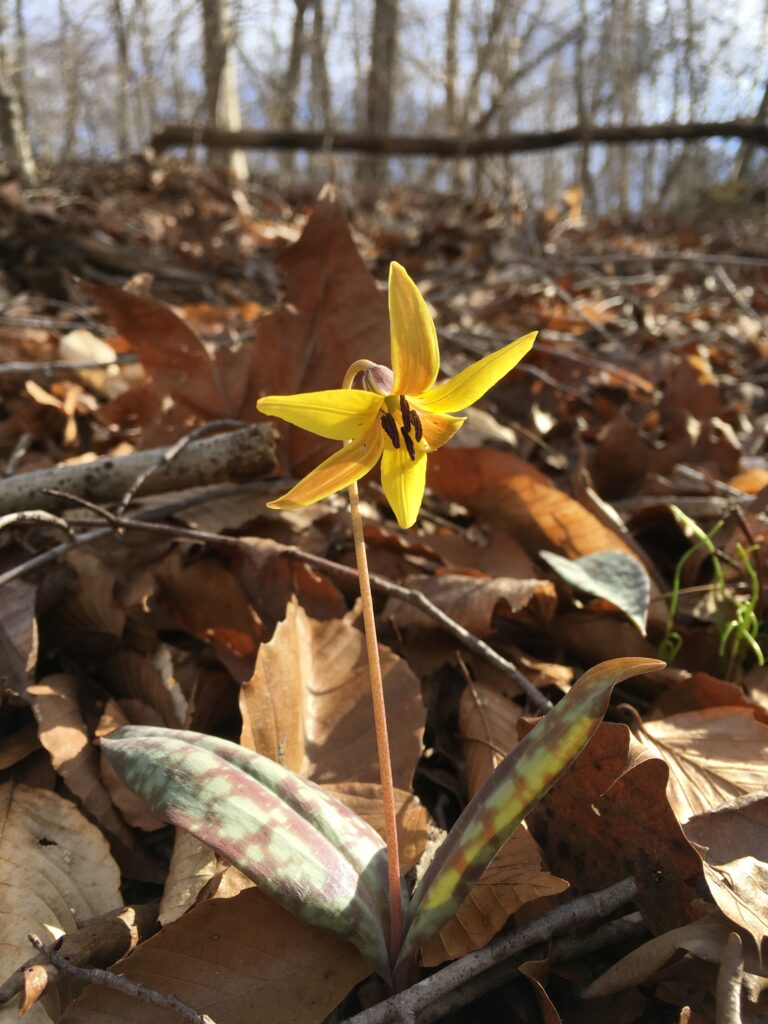
But, this blog isn’t actually about our beloved native Spring ephemerals. It’s about a highly invasive plant that functions very similarly and has only been moving into our region in the past few decades. The plant in question is the invasive Fig buttercup, Ficaria verna.
Fig buttercup, also known as lesser celandine, is a member of the buttercup family, with a classic buttery-yellow flower and dark, shiny leaves. The plant was introduced from Europe and Western Asia as an ornamental plant in the mid-1800s. The flowers are larger than most buttercups we know, and very showy. Like other invasives, it spreads quickly, forms dense colonies outcompeting native plants, and causes other ecological and economic harm. Fig buttercup tends to prefer low lying, floodplain-type habitats, though it can occur on uplands in a variety of soils as well.

In our region, Fig buttercup emerges in late February, and it has been a highly tracked and discussed target for natural resources managers and community members in the Triangle for a couple decades now. Its insidious nature has been experienced by natural resources and parks managers north of us along the east coast, causing extensive ecological damage over the course of the 20th century. There are many examples of this plant completely inundating floodplains or other rich understories in the early spring, preventing other plants from emerging on time, thereby altering the natural processes essential to that habitat.
There is good news: a task force in the Triangle, formed by folks on the North Carolina Invasive Plant Council, consisting of land management practitioners, volunteers, botanists, and concerned community members, have been working to detect and respond to this plant. Early Detection Rapid Response (EDRR) is an essential approach to prevent the establishment and further spread of a known invasive species, and we are right in the middle of the Rapid Response phase!

TLC land managers have been working with this task force to do our part by eliminating this plant from our preserves where we’ve detected it. Thus far, TLC has only found it (and treated it!) at Johnston Mill Nature Preserve, . The New Hope Creek watershed, where Johnston Mill is located, is one of many in the Triangle Region that has seen a massive bump in fig buttercup spread and establishment.
Our work to keep this invasive plant from further establishment is an essential part of protecting the habitat of certain native Spring ephemerals and other native plants. Where it invades, fig buttercup contributes to major ecological disturbance, throwing off the balance of a system that otherwise ensures ecosystem health, supports biodiversity, and provides valuable ecosystem services that are disappearing in a rapidly developing environment.
If you feel inspired to look out for this plant and think you might have found a population, I encourage you to reach out to the North Carolina Invasive Plant Council to ensure that this plant is effectively eradicated!
