
When we picture the Piedmont region of North Carolina today, many of us envision forests…
By Hannah Royal, TLC Stewardship Manager
Hear that lonesome whippoorwill
He sounds too blue to fly
The midnight train is whining low
I'm so lonesome, I could cry
Hank Williams’ melancholy country classic in 1949 helps paint the picture of attitudes and beliefs about the Eastern whip-poor-will (Antrostomus vociferus), a bird species native to the Eastern half of the United States. They were once synonymous with early summer evenings, and in the South the saying was “you can go barefooted when you hear the whip-poor-will call.”
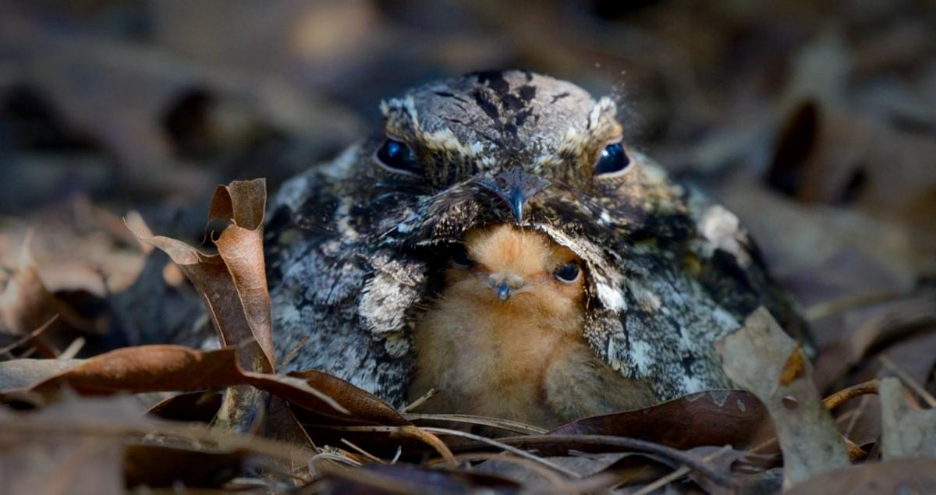
Their calls have been described as eerie, unsettling, and spooky, and this quality has been portrayed in sinister ways with great effect in horror stories. The Legend of Sleepy Hollow (1820, by Washington Irving) used the bird’s nighttime calls as a tormenter of Ichibaud Crane, taunting his already nervous nature. In “The Dunwich Horror 1928, H.P. Lovecraft),” whip-poor-wills were used as death omens, portrayed as psychopomps to transport people from this life to the next. They appear in multiple Steven King novels as various iterations of a supernatural happening. The distinctive nighttime calls from the whip-poor-will have obviously struck a nerve in the human psyche and captured our wild imaginations. Since humans are diurnal creatures, darkness can trigger a suite of responses to the unseen environment, and our imaginations can fill the void. It can certainly be amusing to entertain the “spooky” realm when darkness blankets the earth and think that a bird’s call means that a headless horseman is going to snatch you up. The reality is that some animals, like the family of nightjar birds that include the Eastern whip-poor-will, have a circadian rhythm that has them awake when we are settling in for the night.
Nightjars (family Caprimulgidae) are found on all continents except Antarctica, and here in the Piedmont of North Carolina we have three species; Chuck-will's-widow (Antrostomus carolinensis), Common nighthawk (Chordeiles minor), and the Eastern whip-poor-will (Antrostomus vociferus). All are extremely camouflaged with intricately mottled brown/gray/black/tan patterns and are crepuscular aerial insectivores. Due to their cryptic coloring, they are more often heard than seen, especially for the Chuck-will's-widow and Eastern whip-poor-will. The Common Nighthawk does not possess the famous call like its relatives and instead gives a nasal “peent” sound while in-flight during warm summer evenings. They have been spotted flying around in the evening sky during Durham Bulls games! Chuck-will's widow and the Eastern whip-poor-will calls can be easily mistaken for one another, but with some practice it becomes easy to tell them apart.
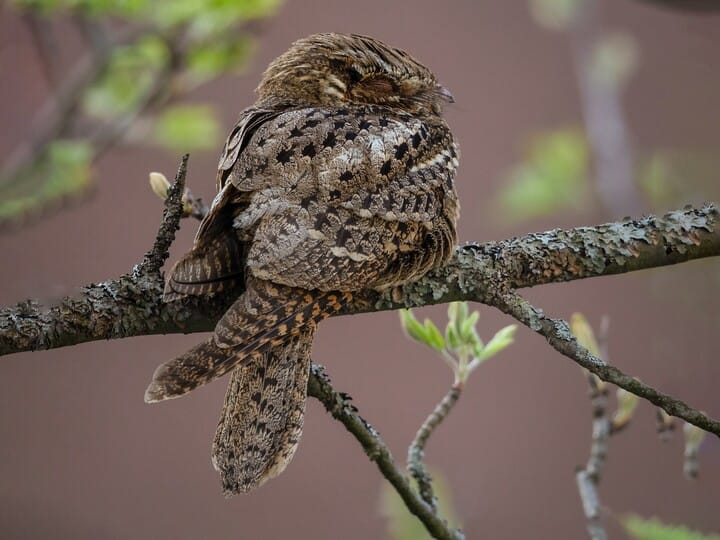
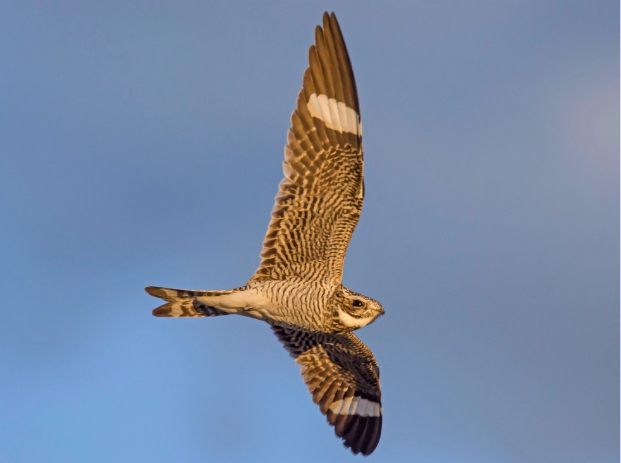
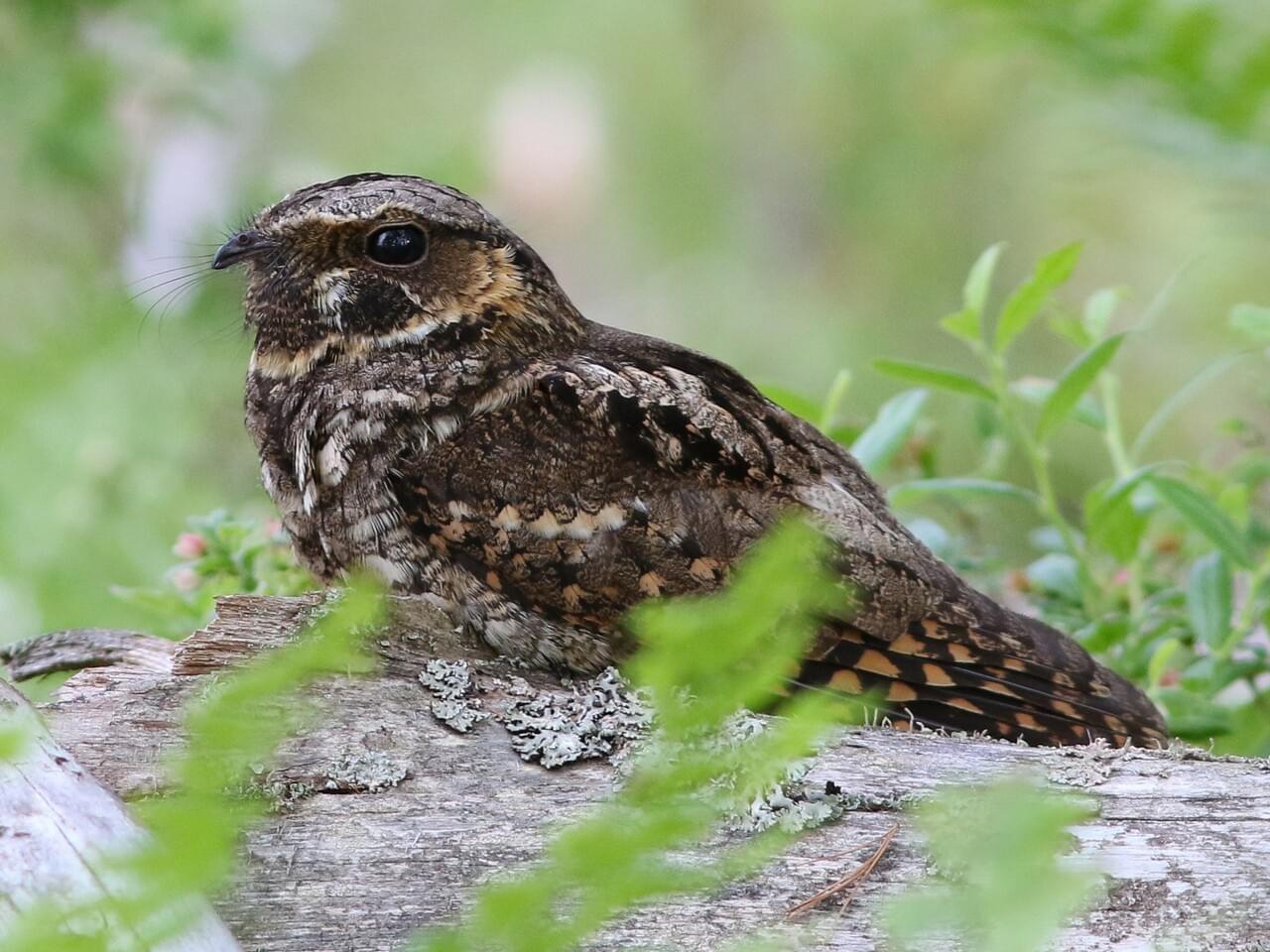
Although they can all be found in a variety of habitats, they are most associated with open landscapes and are ground nesters. If you grew up in a rural area or frequently visited someone out “in the sticks”, you may recall hearing any of these species on early summer nights as a child. Comments about nightjars usually center around a deep nostalgia for childhood summers and the people near and dear during that period of life. Some nightjar species work in rhythm with the lunar cycles, which undoubtedly plays into some people's fascination and imagination surrounding the phases of the moon. In reality, the birds are using lunar illumination (moonlight) to hunt flying insects in a better light. The nesting process has been documented to happen in conjunction with the full moon so that the parents can maximize foraging efforts. It’s not spooky, it’s just biology!
All three of our local nightjar species have experienced concerning levels of population declines. The Common Nighthawk and the Chuck-will's-widow are both considered a “Common Bird in Steep Deline,” which means that they are still too numerous but have been experiencing concerning declines. Eastern whip-poor-wills are a “Yellow Alert Tipping Point” species, which is a more troubling designation meaning that they have lost at least 50% of their population within the past 50 years. All three species are suffering population declines for reasons like loss of open landscapes due to either farmland/development/forest succession, pesticides, and disturbances to those ground nests. Due to their crepuscular and cryptic nature (not their desire to torment lost souls at night) they are difficult to survey, requiring extra effort from researchers to gather information about them.
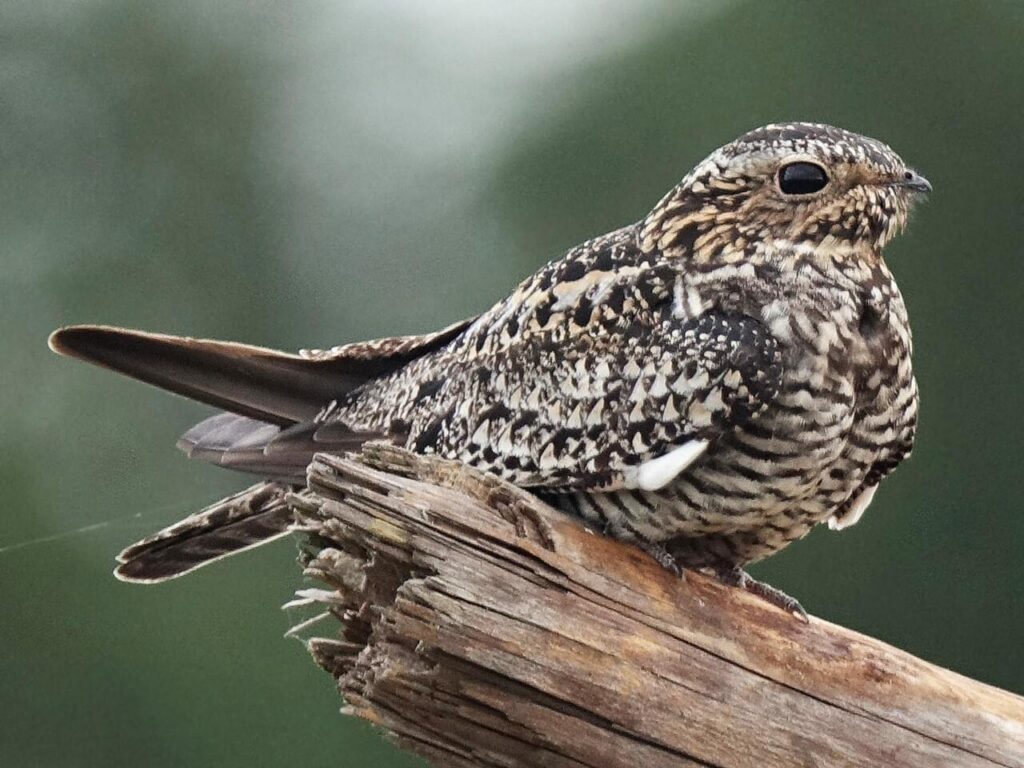
Triangle Land Conservancy (TLC) works to protect vital open space through our Land Protection Team, and each year we are protecting these places through conservation easements on private property and fee simple purchases of land. Our land management teams work diligently to improve habitats through prescribed fire, non-native plant removal, and native plantings on our TLC-owned properties. Open habitats are one of our management priorities, and the Eastern whip-poor-will was listed as one of our target wildlife species in a recent grant application.
Keeping species like nightjars around in the future will require thoughtful consideration, planning, and management of everyone involved in decision making in this area – state government, local government, developers, farmers, non-profits like TLC, and outdoor enthusiasts of any and all sorts just like you. Keeping the nighttime forest alive, unearthly, and spooky depends on it.
Still “Whip poor Will!”–Art thou a sprite,
From unknown regions sent
To wander in the gloom of night,
And ask for punishment?
George Pope Morris, 1846
For more information on these charismatic species, visit the All About Birds or Nightjar Survey websites for more information.
