
Land that was once slated for housing development is now permanently protected and open to…
By Leigh Ann Hammerbacher, TLC's Senior Director of Conservation, East
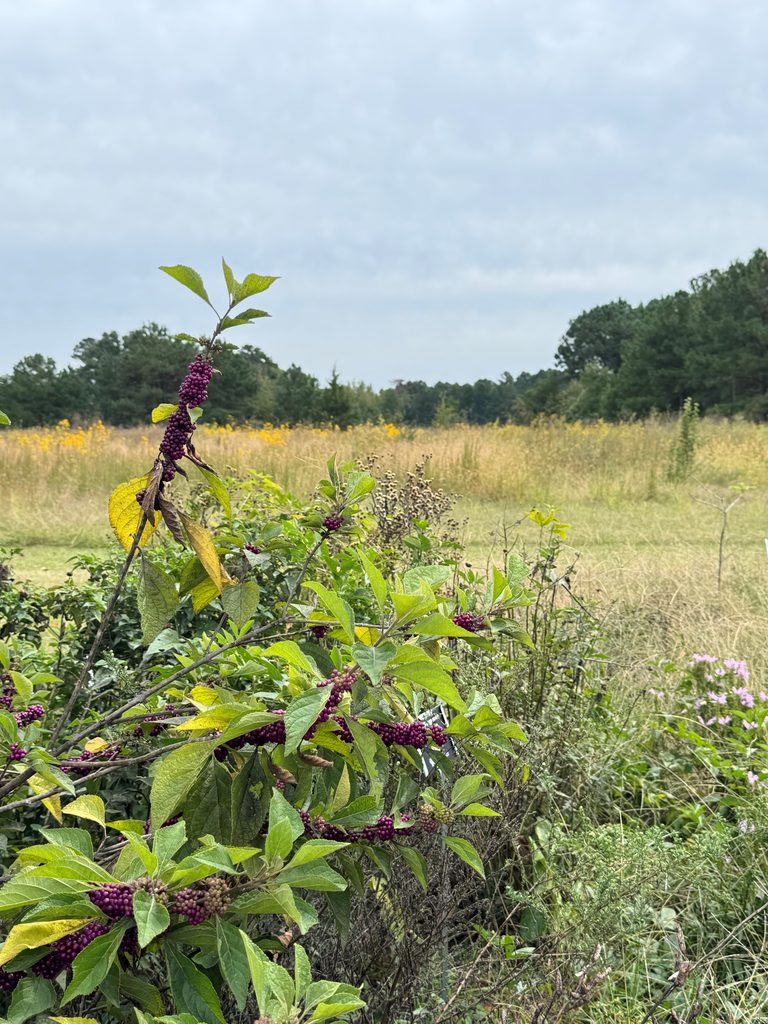
As we get into the heart of the fall season, I always begin to notice that we tend to shift to the warmer colors of the rainbow. All of a sudden, the reds, yellows and oranges really begin to pop. However, one of my favorite fall plants holds strong with its deep violet berries well into the start of winter.
The American beautyberry (Callicarpa americana) is a small shrub that often grows 3-5 ft. tall and usually just as wide, sometimes reaching as tall as 9 ft in the right conditions. It has long, arching branches and yellow-green fall foliage which is a nice addition to the fall garden, along with its signature bright purple berries, which hug the branches and persist often into winter.
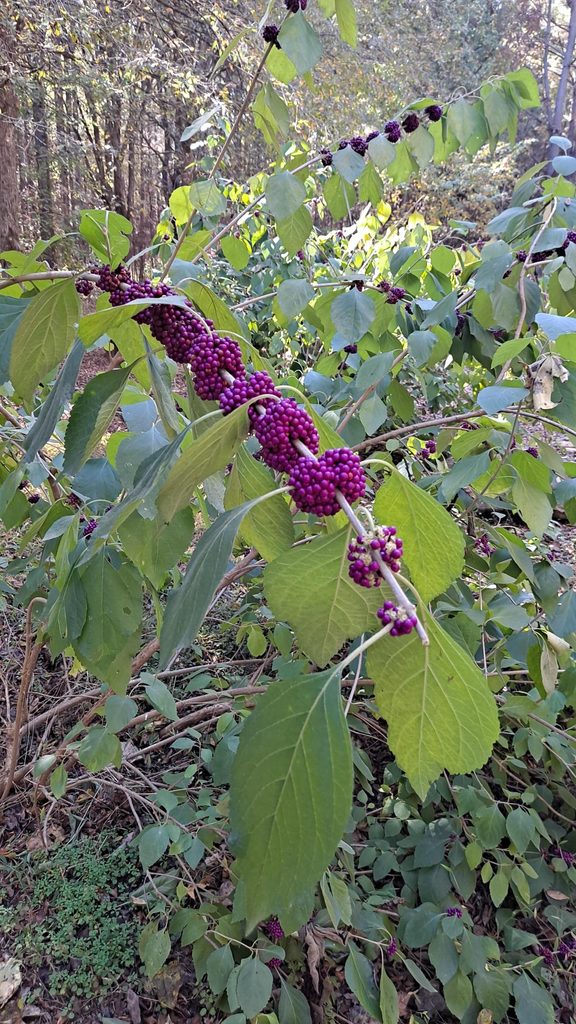
These bright berries are edible (although pretty bland) and can be made into a fantastic jam, jelly, or syrup. They also make great face paint if you are in a pinch! The shrub likes open areas and at least a little sun, and I often find it in small clearings in the woods or near old home sites.
Native to North Carolina and the Southeast, American beautyberry has long been valued by Indigenous peoples. According to the USDA plant guide, the roots, leaves and branches of the American beautyberry were used by Indigenous American tribes for various medicinal purposes including to treat fevers and illnesses, dizziness, and stomachaches. The shrub is also a natural insect repellant. It is a favorite of birds and pollinators, while deer seem to have little interest once its established, making it a great border plant.
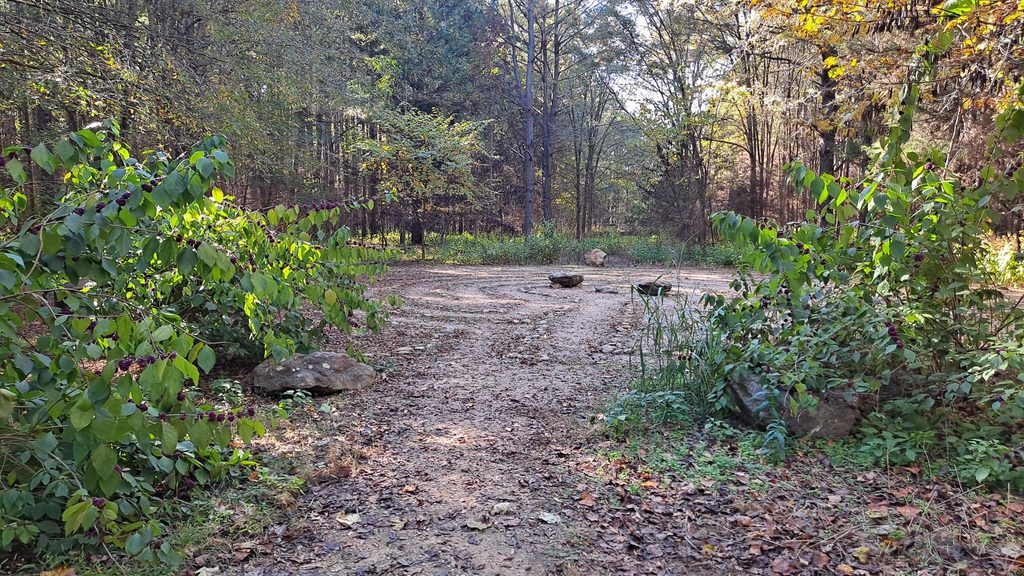
You can find this plant in TLC’s pollinator garden at Williamson, by the Labyrinth at Brumley North, and along several other TLC trails. Note there are several non-native varieties so look for a more upright form and berries that hug all the way around the branch instead of just on top.
If you are in search of a little more purple beauty in your fall season, search out this shrub or add it to your garden, the birds and your eyes will thank you.
