Old Creedmoor
Explore this community-built trail system near Falls Lake
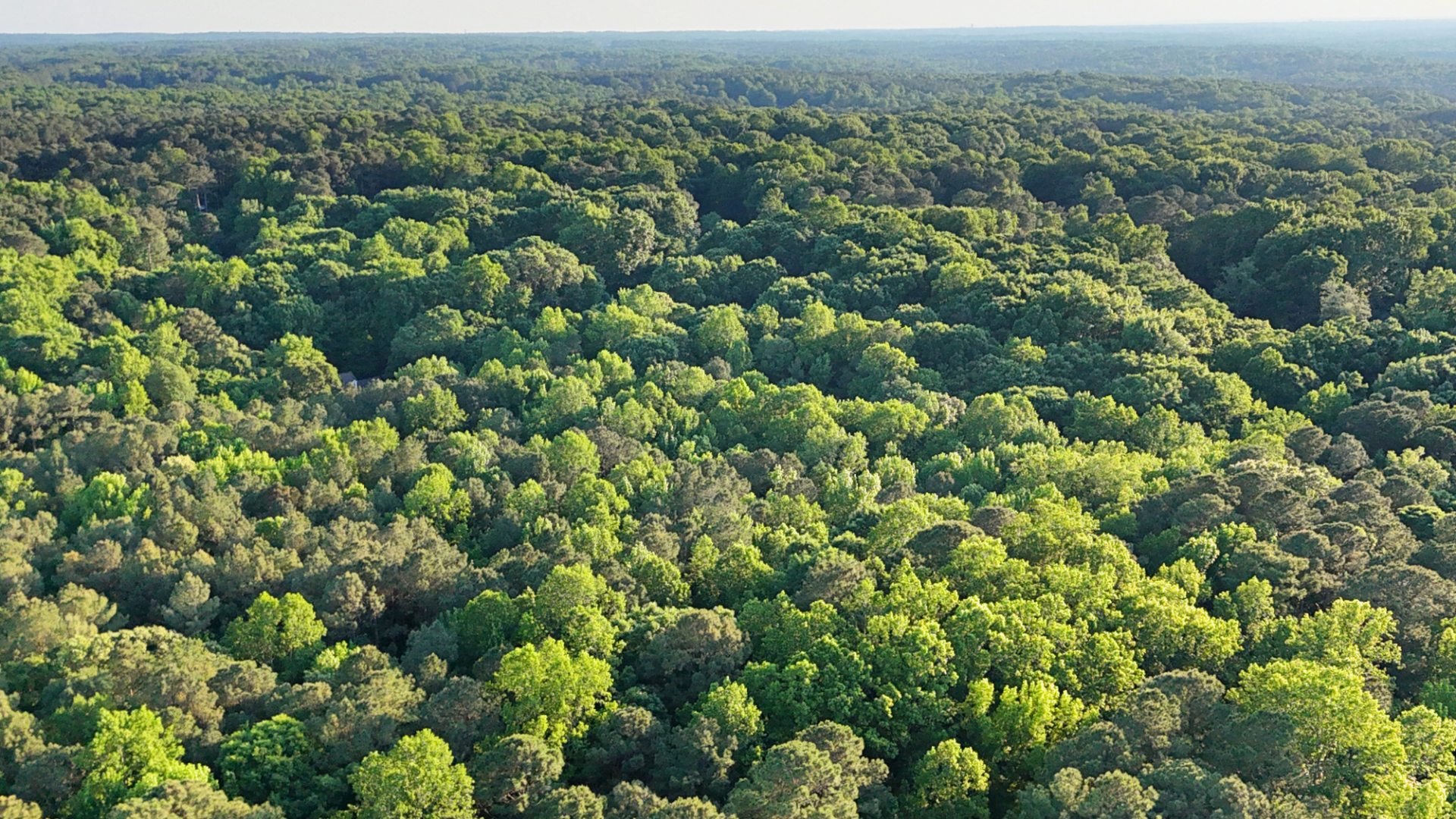
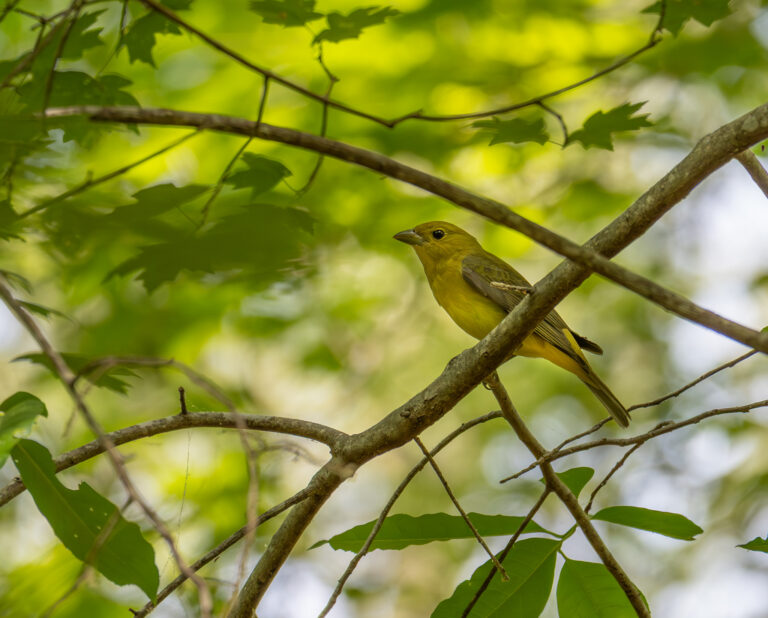
Once destined for housing development, Old Creedmoor Nature Preserve now protects 65 acres of pristine forest habitat and critical streams, as well as about four miles of multi-use trails.
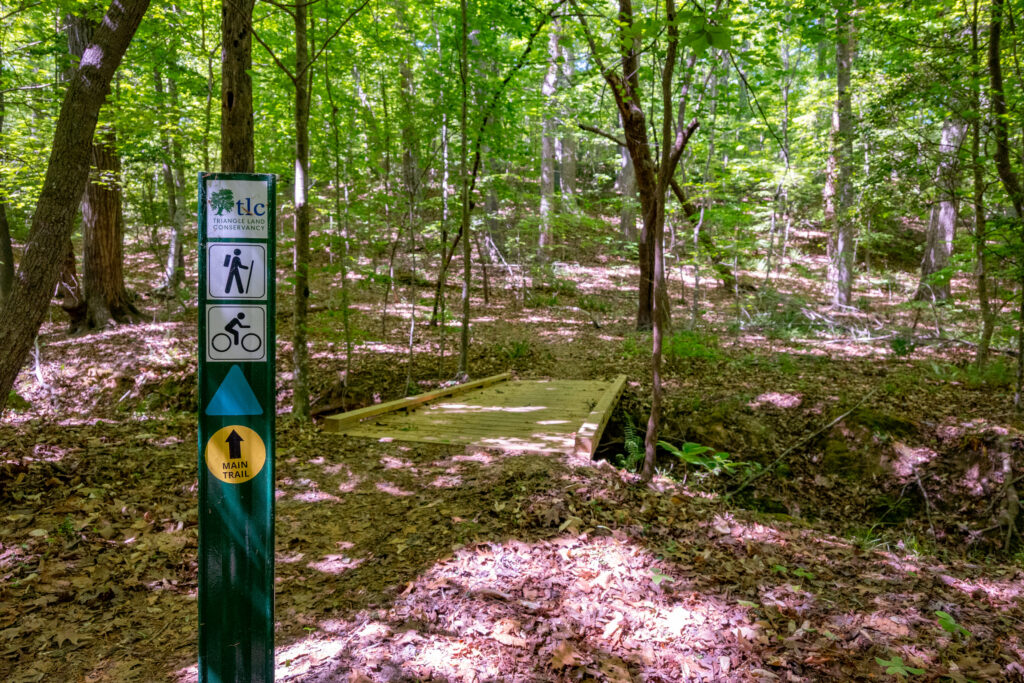
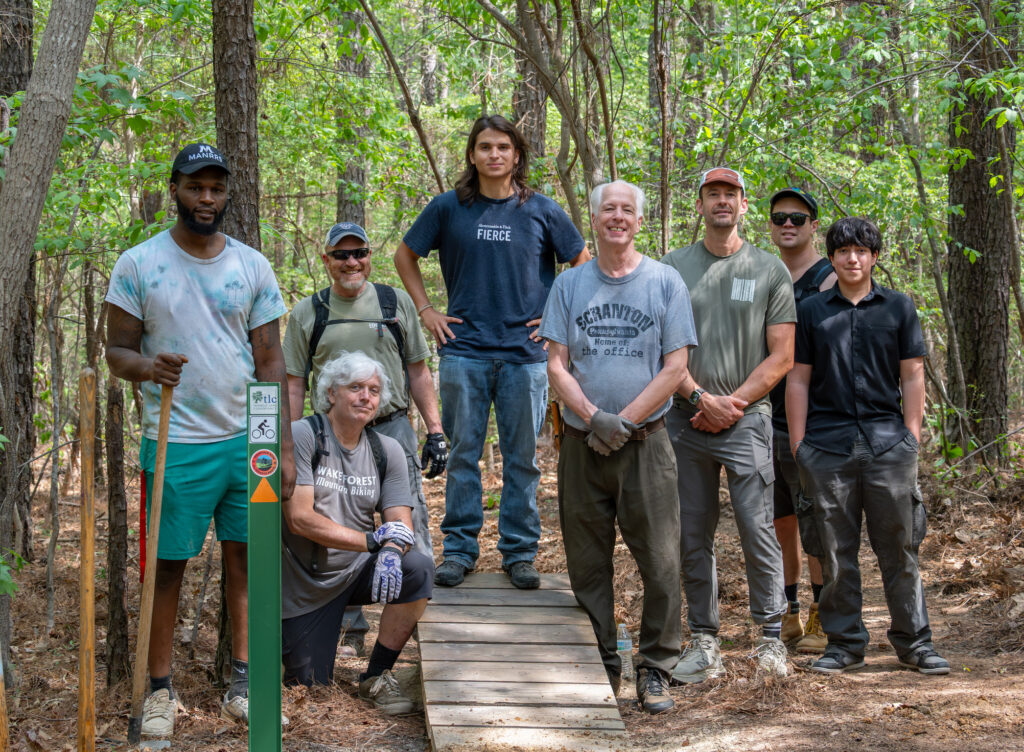
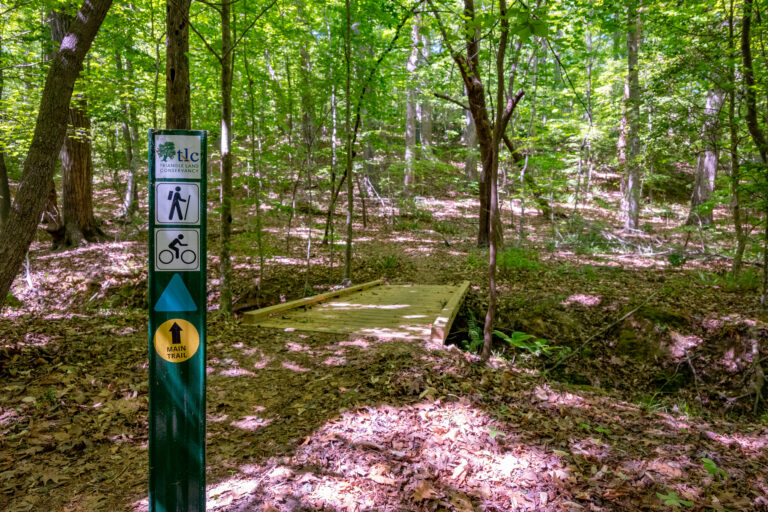
Before becoming TLC's eighth public nature preserve, Old Creedmoor was home to an unofficial community-built trail network that attracted bikers from across the Triangle. With the help of Triangle Off-Road Cyclists and Engineers Without Borders, TLC was able to reroute and renovate the existing trails in erosion-prone areas and add infrastructure like bridges to help promote better accessibility and protect water quality. Non-motorized cyclists can also enjoy more challenging trails here compared to other TLC properties, with increased elevation and alternative bike routes with small features offering different ways to experience the preserve.
With the loss of several of the region's beloved bike trails in recent years, the protection of Old Creedmoor ensures that this and will remain a community resource for generations to come.
Like TLC's Brumley and Williamson Preserves, Old Creedmoor's trails will close periodically when trails are too wet to prevent erosion and other damage. Visitors are able to check trail status on our website or on partner websites such as TORC.

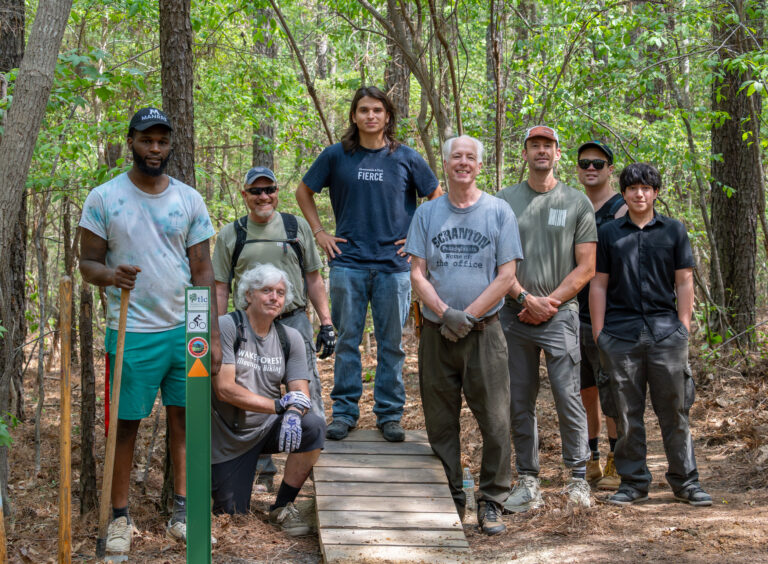

Originally slated to be developed into over 40 houses, this property came to TLC’s attention in 2020 when a developer reached out after recognizing the land’s conservation and recreation potential.
Old Creedmoor Nature Preserve sits within the Upper Neuse River Basin, a 770 square mile area draining to the Falls Lake Reservoir. This important region provides drinking water to over half a million customers in eight municipalities including Raleigh, contains nine public drinking water sources across six counties, and offers recreational opportunities for the basin’s 190,000 residents. By protecting Old Creedmoor’s streams and forests, TLC helps safeguard clean drinking water for the region while preserving intact habitat that both people and wildlife rely on.
Conserving land like Old Creedmoor is one of the most cost-efficient methods of protecting water quality. Forests help anchor soil, slow stormwater runoff, and filter pollutants and harmful nutrients out of water. Landowners, state and local governments, and conservation organizations like TLC have worked together to develop a watershed protection program to ensure the long-term health of Falls Lake’s water quality.
TLC was able to purchase and protect Old Creedmoor thanks to funding from the City of Raleigh Watershed Protection Program and the Wake County Open Space Program. Additional funding to support the preserve’s construction came from the NC Great Trails State Coalition, the Caterpillar Foundation, Triangle Off-Road Cyclists, and the Barnhill Foundation.
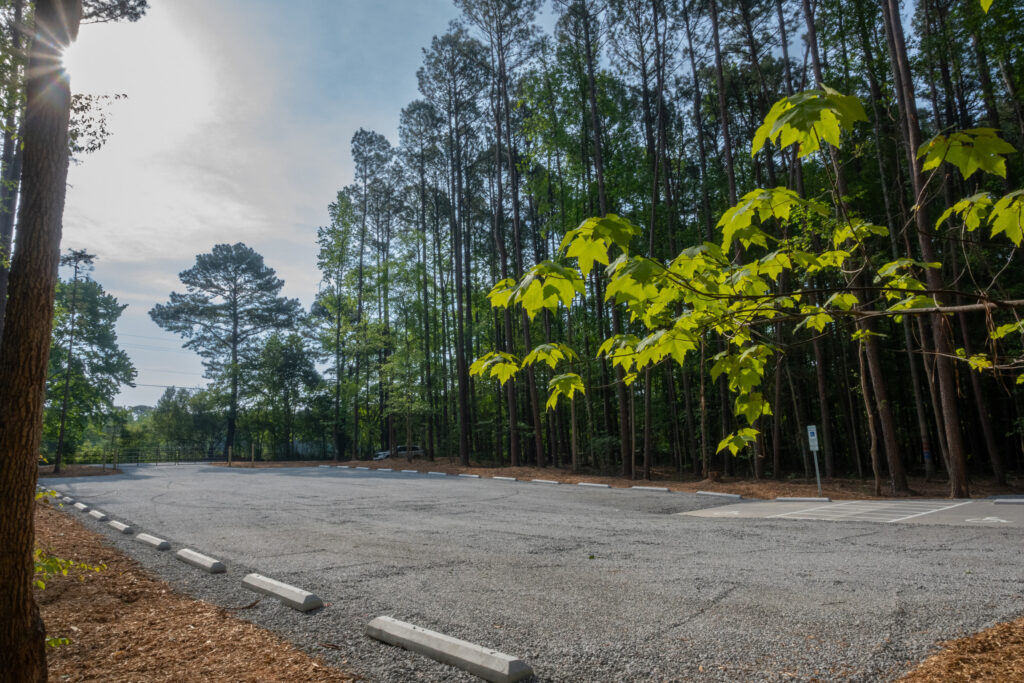
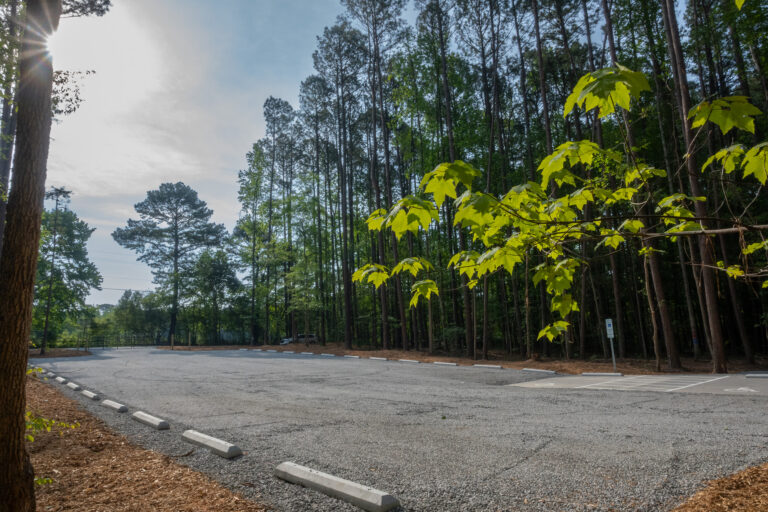
Old Creedmoor Nature Preserve has one parking lot located at 13509 Old Creedmoor Road, Wake Forest, NC 27587. Please do not park in the powerline right of way between the road and the preserve gates.
Old Creedmoor Nature Preserve features a multiuse trail system that welcomes both non-motorized mountain bikes and foot traffic. The preserve’s two trails—Orbweaver Loop and Lizard’s Tail Loop— are directional to ensure all preserve visitors have a safe and enjoyable experience. On Sundays through Wednesdays, all bike traffic goes left and all foot traffic goes right. On Thursdays through Saturdays, all bikes go right and all foot traffic goes left.
Along the preserve’s trails, visitors will find alternate bike route icons. These icons on trail markers indicate optional pathways of higher difficulty for mountain bikers, which could include jumps and other technical features. Designed to offer bikers a variety of ways to explore Old Creedmoor, these alternate routes are not open to foot traffic. Apart from these marked alternate routes, visitors should not ride off trail and refrain from constructing additional bike features.
Preserve Guidelines & What to Expect
When are the preserves open?
All TLC preserves are open dawn to dusk.
Where do I park?
All TLC preserves have designated parking lots. Please park and access the preserves only through these entrances. Some preserves, like Brumley Nature Preserve, have several parking access points. Williamson Preserve (specifically, the Bootleggers Loop) can be accessed from the Neuse River Greenway.
Can I mountain bike at TLC preserves?
- Mountain biking is available at Williamson & Old Creedmoor preserves in Wake County and Brumley South Preserve in Orange County. You can check the trail status at any time by visiting our trail status page. Please respect all trail closures, which help us maintain the trails and the fragile habitats near them.
- Please note, all riders must wear helmets. E-bikes are not permitted.
- Please observe good trail-sharing etiquette, including giving audible warnings and slowing down to pass hikers and other riders.
Can I bring my dog to TLC preserves?
Yes! Dogs are welcome at all TLC preserves but they must be leashed at all times on a 6-foot physical leash. This is critical for the safety of other visitors, wildlife, and farm animals.
All pet waste must be bagged and disposed of off the premises to protect water quality and habitats.
Will there be cell phone service?
Cell phone service varies depending on your carrier and so is not guaranteed at any of the preserves. Cell coverage is generally poor at the southern half of Williamson Preserve near the Neuse River Greenway Trail, as well as most of Horton Grove and White Pines. Please plan accordingly.
Is there any trail etiquette I should use?
- On shared hiking and mountain biking trails, please walk on the right side.
- Mountain bikers should give an audible warning and slow down to pass hikers or other riders.
- All dogs must be leashed and any waste bagged and disposed of off the premises.
- Please stay on the marked trail in order to help us protect delicate plant and wildlife habitats.
Are there restrooms or water available at the preserves?
Port-A-Johns are available at the Brumley South New Hope Church Road parking lot and at the Williamson Parking lot. No other preserves have restroom access or potable water.
What activities are prohibited?
- Littering
- Off-trail riding and hiking
- Horseback riding
- Racing on bikes
- Electric bikes (e-bikes)
- Smoking
- Bringing or consuming alcohol
- Collecting plants and wildlife
- Hunting
- Feeding wildlife or livestock
- Approaching or handling livestock or farm equipment
- Firearms
- Swimming
- Tents and/or camping
- Drone use
- Metal detecting
- Commercial activity of any kind
Let’s Do This Together
With your support, we can secure a thriving tomorrow by taking action today